
VINO COSTA, aka ‘costavin’, is a traditional wine from La Alpujarra, where it has been produced for generations. It is made by blending red and white grapes, frequently from vineyards located at high altitudes in the Sierra de la Contraviesa, and also in the Alpujarra Alta (high Alpujarra).
An acquired taste for some (and an instant love affair for others!), the Vino Costa varies in strength and flavour. While the reporter considers it the best alcoholic drink in the area, some people (especially first-time visitors!) declare it “too strong” and fear they will become drunk quickly. Or are drunk quickly and hate it. Proving the point, one visitor at Christmas retired to bed after a few glasses, saying that locals (including her host!) were “monstrous”.
While the production of Vino Costa historically saw country men (‘campesinos’) stomping the grapes with their bare feet, today the process is more sophisticated and controlled. Read on to find out more about this delicious local tipple…
A drink with a history
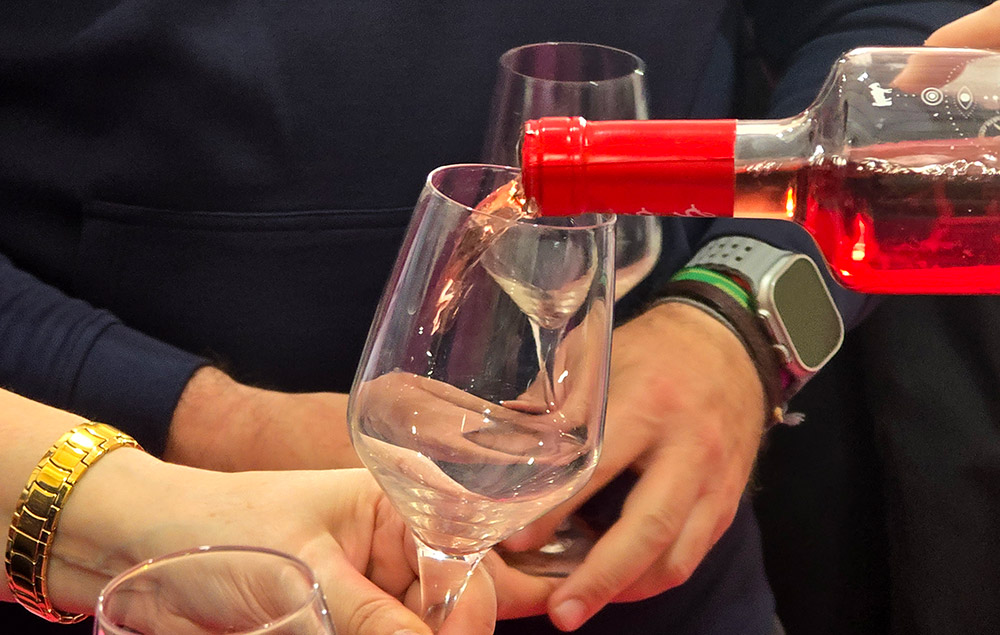
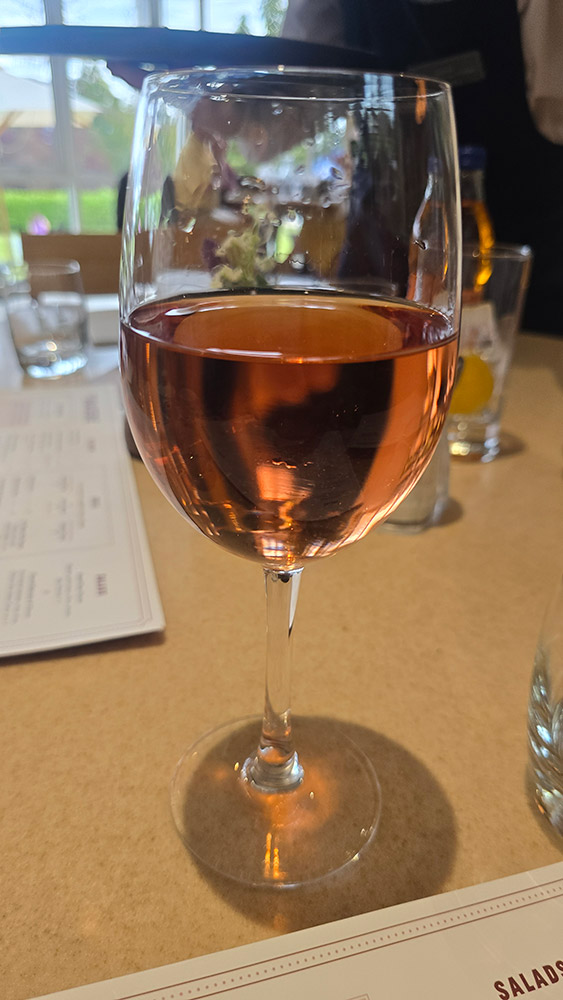
The name “Vino Costa” refers to the nearby Mediterranean coast, which can be seen from La Contraviesa – a grape growing zone – although the vineyards are located at least 1,000 meters above sea level. This altitude, along with rocky soils and a dry climate, gives the wine its structure and intensity. The style is typically rosé – although slightly darker than most commercial rosés – with some acidity, and a more ‘rustic’ feel than supermarket wines. There is variety in colour, taste, and ‘body’.
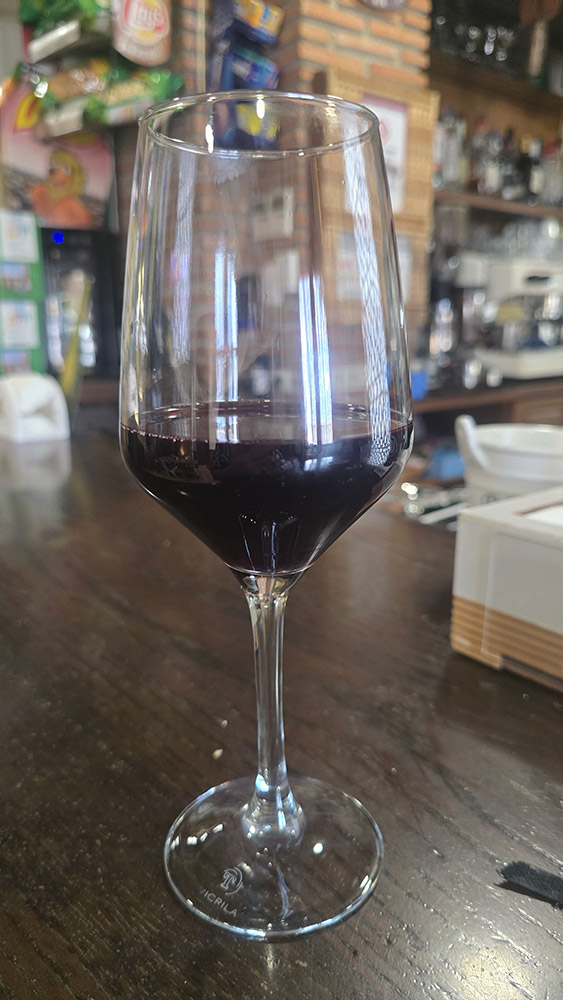
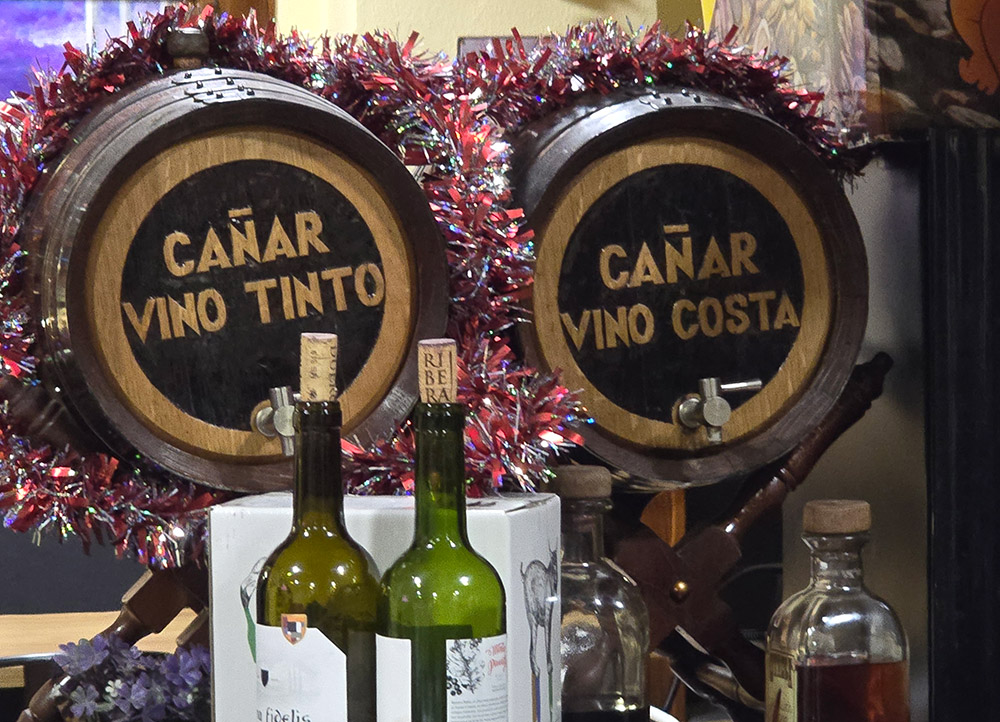
Recently, some producers have developed delicous ‘tinto’ (red) variants – such as Bar Piki in Cáñar, located on a no-through road above Órgiva in La Alpujarra. This is the reporter’s favourite variant, as it is slightly soporific – great for these cold winter nights. Three glasses of this “star variant” (sic) accompanied by ‘tapas’, and bedtime is more relaxed (and warmer!).
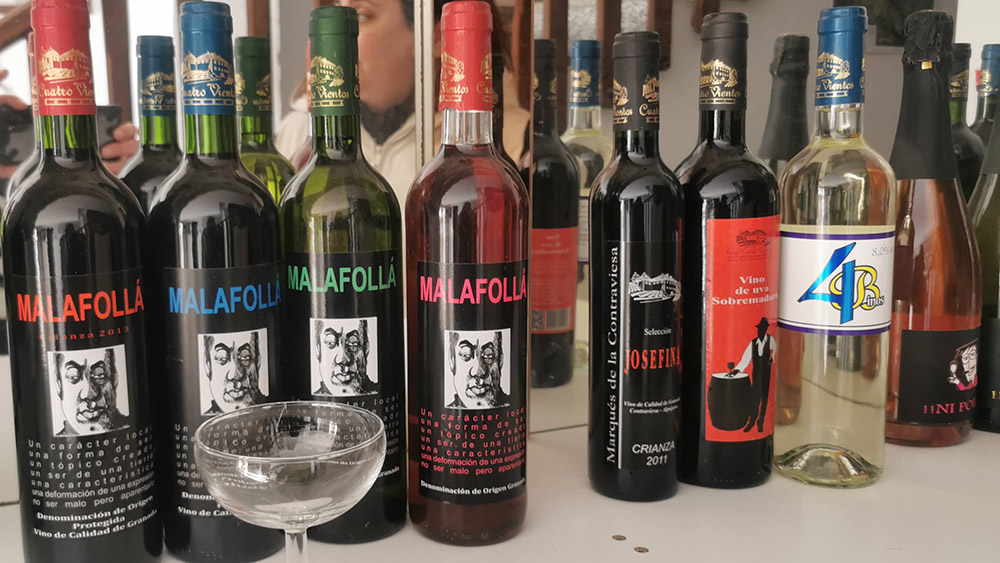
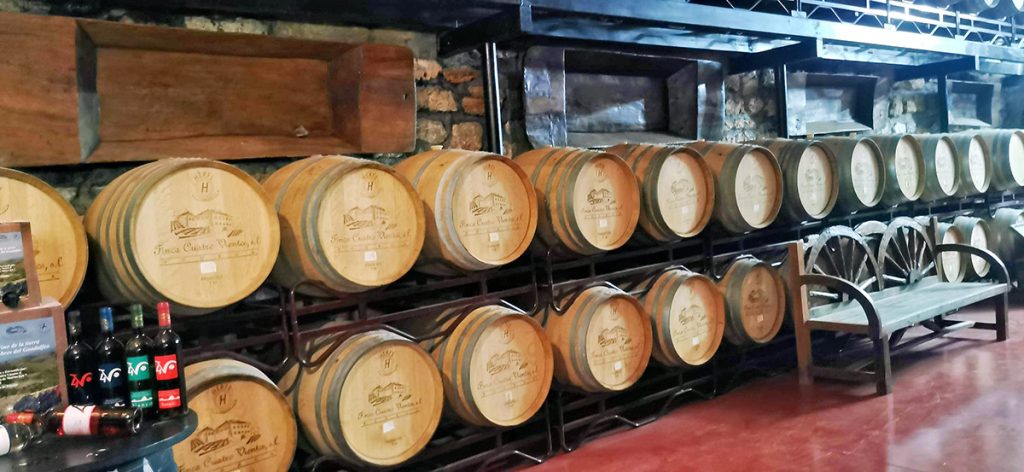
More rarely, you’ll find some decent ‘blanco’ (white) variants – such as that produced by Haza del Lino near Polopos on La Contraviesa. ‘Vino blanco’ is also made by Bodego Cuatro Vientos near Murtas – a huge bodega that does extensive wine tours. With these “blancos”, we are referring to a smooth, dry drink – not yellow rocket fuel that tastes like sherry or vinegar, which the ‘abuelo’ has stored in his ‘almacen’ for 30 years.
A family affair…
Historically, ‘costavin’ – or ‘vino del terreno’ – was made in small family bodegas for personal consumption, and to keep the men warm when working on the land. It was frequently fermented in open tanks or barrels, bottled without filtration, and consumed young. Be warned: if it’s too young, it can give you a bad stomach, so procure from reliable sources.
The Vino Costa process was originally informal and rooted in local tradition, passed through families, rather than modern wine-making techniques. Let’s not forget the bare feet, which we sincerely hope were scrubbed first! But we doubt it, somehow! Best not to dwell…
Relatively cheap and easy to make, the Vino Costa became a staple in homes, ‘ventas’, and bar/restaurants across Granada and Almería provinces. It also supported ‘bodegas’ across the area, including on the Contraviesa and near Cádiar – as well as those hidden in many people’s cellars!
Vino Costa revival
In the late 20th century, Vino Costa began to disappear, as industrial winemaking and international styles took over – as is usually the way with mass production and trends. Fortunately, some producers kept the tradition alive. One such person was Manuel Valenzuela, founder of Barranco Oscuro in Cádiar. He started making Vino Costa in 1979, using organic methods with no additives and minimal intervention. His wines helped to reignite support for the local product.
Francico García Carrión of Haza del Lino is another local producer, who who reformed his bodega in 2014. As well as producing delicious wines, which he serves at his good restaurant opposite the bodega, he offers guided tours that show how the process works.
As well as these established bodegas, many families and individuals still make Vino Costa using similar methods and their own grapes. This is an important part of preserving La Alpujarra’s rural culture…. as well as giving residents a cheap and tasty tipple (although prices are rising in many bars!).
If you want the best bargains, either buy a 15lt box from a bodega or head further towards the Almerian Alpujarra, where Vino Costa is cheaper per glass in bars.
How is Vino Costa made?
Vino costa is made using refined methods. It is necessary to control the conditions and temperature to ensure you don’t produce vinegar instead of wine! And to ferment your liquid for long enough to not poison the consumer (as happened once at the reporter’s birthday party, when she later thought she had Covid!). It’s important to avoid the cellar temperature falling below 11C or rising above 23C, to avoid the vinegar effect!
Commercial producers have tried and tested processes. Even then, they achieve a slightly different taste every year, because the grapes vary. This is part of the fun of trying different variants.
According to Francico of Haza del Lino, his personal fermentation process occurs over six days. First, the red is extracted, then the white, then the rose. The Crianza is kept in wooden barrels, the rest in aluminium. For wine to be labelled as a Crianza, it must be aged for two years, with a minimum of one year in an oak barrel and another year in the bottle before it’s sold.
Benefits of Vino Costa over mass-produced wine
Unlike supermarket wine, Vino Costa contains hardly any sulphites. This means it is less likely to cause a headache. It is also relatively low in sugar and some diabetics report that, unlike beer, it does not significantly make their blood sugar level rise.
The reporter can testify that a few glasses of Vino Costa (unless it is badly fermented) generally result in a clear head in the morning, whereas a cheap supermarket ‘tinto’ – or a cheap cava – cause a banging headache, with a scramble for the Ibuprofen.
One diabetic and one bar owner directly told South of Granada that ‘vino costa’ does not raise blood sugar like commercially-produced wines and especially not like ‘cerveza’ (beer). Although formal research would be needed to confirm this idea, it does seem logical that avoiding high levels of sulphites and sugar is preferable to consuming them in copious amounts!
What do ‘los guiris’ think
While the reporter has enjoyed VIno Costa since her first trip to La Alpujarra in 2002 (when we Brits Abroad passed out in the midday sun, having downed a 5lt bottle from the host!), what do other ‘extranjeros’ think of the local tipple?
Manuela, a waitress and artist, says: “It is very strong! Wine of the land!”
Tanya Williams said: “I thought it was the equivalent of what scrumpy is to cider. It sounds rough and strong, so not my drink. Have I misrepresented it?”
Martin Eisler says: “Yes! 14-15 alcohol and no artificial additives, and cheap!”
“You’re monstrous and I’m going to bed,” said Ruth – a visitor from London.
Lucy Hayes Logan of Tus Alpujarras advice agency in Lanjarón sums up: “Local wine is an important part of the Spanish lifestyle and culture. It’s a centrepiece of the table for familes to enjoy in company, especially during ‘festivos’, such as at this time of year. Local wines are always appreciated and showcase the area of origin. People are proud to support local people and produce.”
If you’re not getting the right experience from Vino Costa, it pays to try different varieties – and bodegas – until you find one that suits your personal palette. Here to stay, Vino Costa is a historic staple of La Alpujarra and (for some!) one of its many attractions!