
After storms Leonardo and Marta, we now have Nils an Oriana, meaning more rain, snowmelt, and worry about dams. Jo Chipchase reports on the current state of play…
A WEEK after storms Leonardo and Marta swept across southern Spain, the immediate drama temporarily eased in Granada region. However, we now have storm Oriana (or is it Nils) battering the area, with high winds, sleet at around 1,100m, and further yellow weather warnings from AEMET.
The results of a week of extreme weather are visible and the danger isn’t over yet. Mid-week, river levels dropped (a tad) from peaks – yet the ground remains saturated, slopes are unstable, access routes remain damaged, and reservoirs stand at capacity. And now the rain is falling again.
Rural wreckage from storms
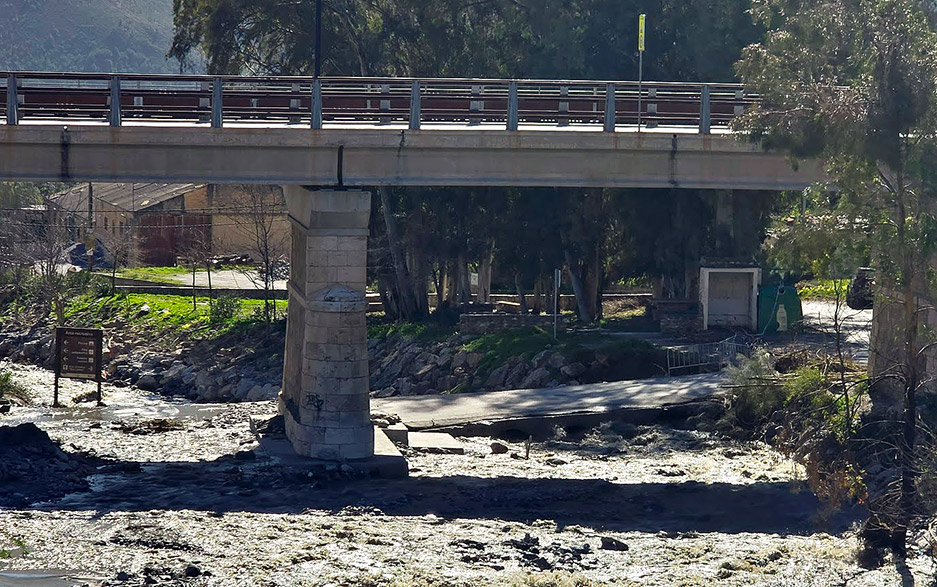
In rural communities, such as La Alpujarra, last weekend’s heavy rainfall – combined with snowmelt from higher elevations and the annual ‘deshielo’ – ended in residents of some villages becoming temporarily stranded on their land. Emergency repairs carried out by local ‘ayuntamientos’ have already been tested by further ‘agua’ flowing into the zone. In towns such as Órgiva, small bridges reopened by municipal diggers last Sunday/Monday were closed a second time round.
Across southern Spain, recent storms highlight the vulnerability of infrastructure built close to rivers, ‘secanos’, or ‘barrancos’. While emergency response teams have restored some essential services – such as mains piped water in the village of Bayacas, which is part of Órgiva municipality – concerns persist about ground stability, and what happens if (or rather when!) further runoff water arrives.
Residents of Órgiva are currently without mains water for “at least three days” because the swollen Guadalfeo river has damaged vital, municipal infrastructure for the town’s water supply. Tanks with water are being provided to residents.
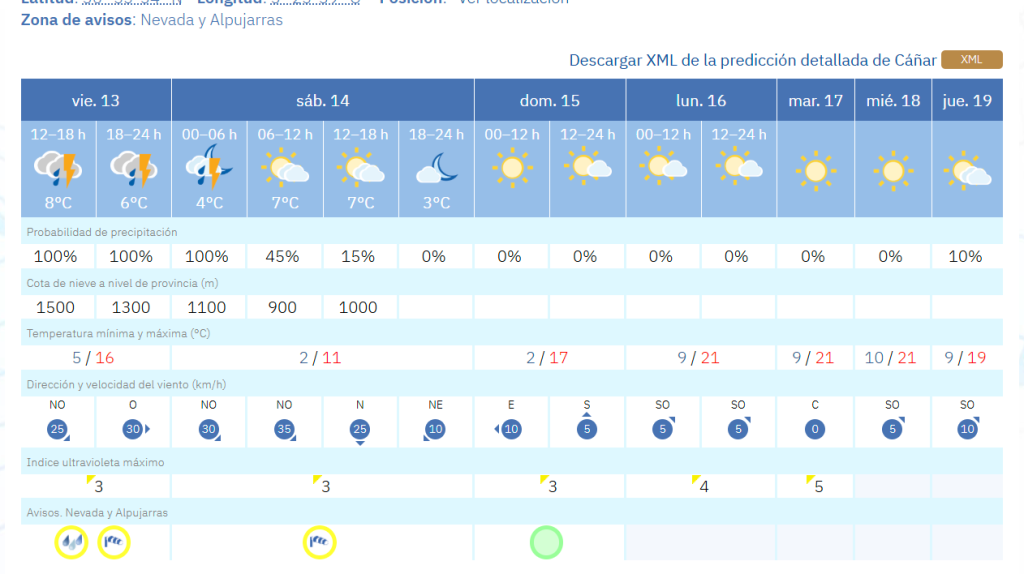
Alerts remain active
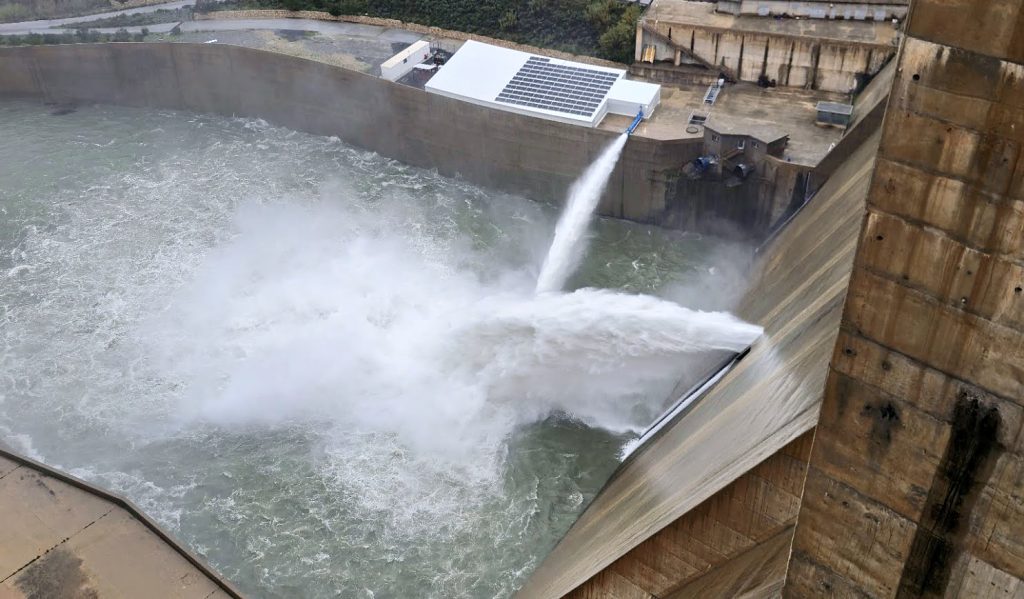
Hydrological data shows that river levels across Granada province have generally receded from their peaks, but flows remain higher than seasonal averages. The Guadalfeo river that traverses Órgiva, and ends in Rules Dam, remains forecful days after the heaviest rainfall. And the Rules Dam remains under strain, with the release of water forming impressive jets.
This is not only a legacy of rainfall exceeding “the norms”, but also accelerated snowmelt from Sierra Nevada, as temperatures have risen by over 10C during the last week, peaking at about 18C. We still have rain falling on to a substantial snowpack, combined with variable and unstable temperatures. This has increased runoff into river systems, causing localised problems.
Unresolved access issues
Following the flooding reported last week in the region, many areas are suffering from broken or degraded access tracks. These include parts of Orgiva municipality, as well as areas such as Polopos – on the Sierra de Contraviesa
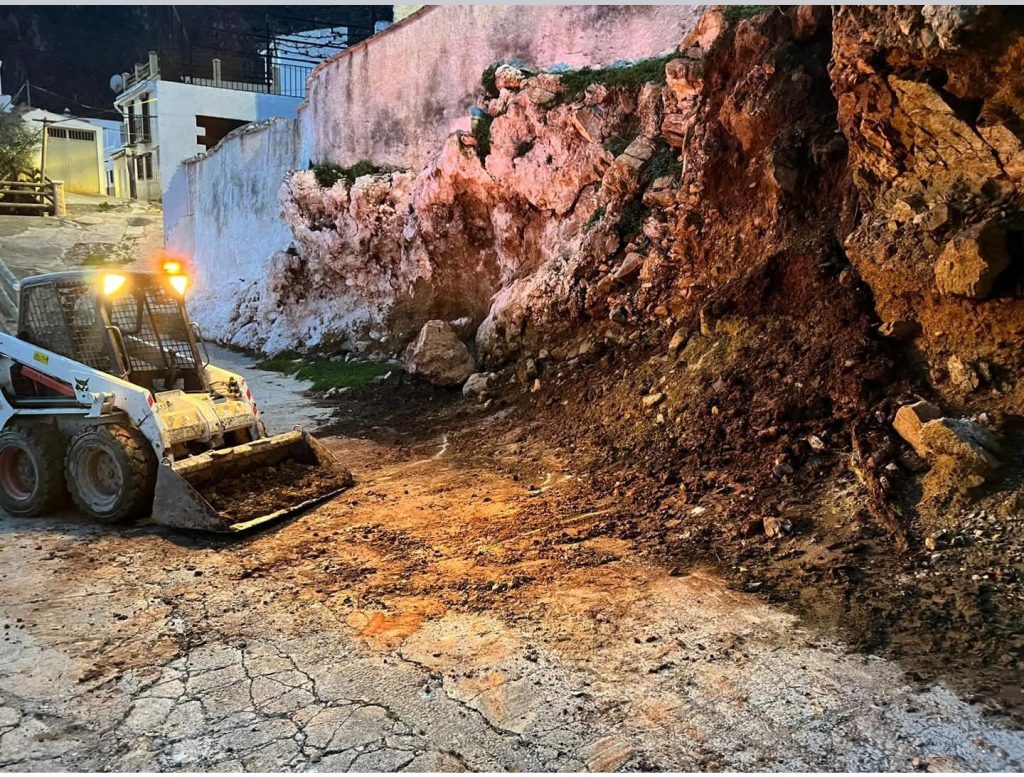
While rural tracks can be repaired (it is more complex when they are in riverbeds), concerns remain over the longer-term durability relating to floodwater and further erosion. Can access can be restored to withstand future storms, with extreme weather events more frequent?
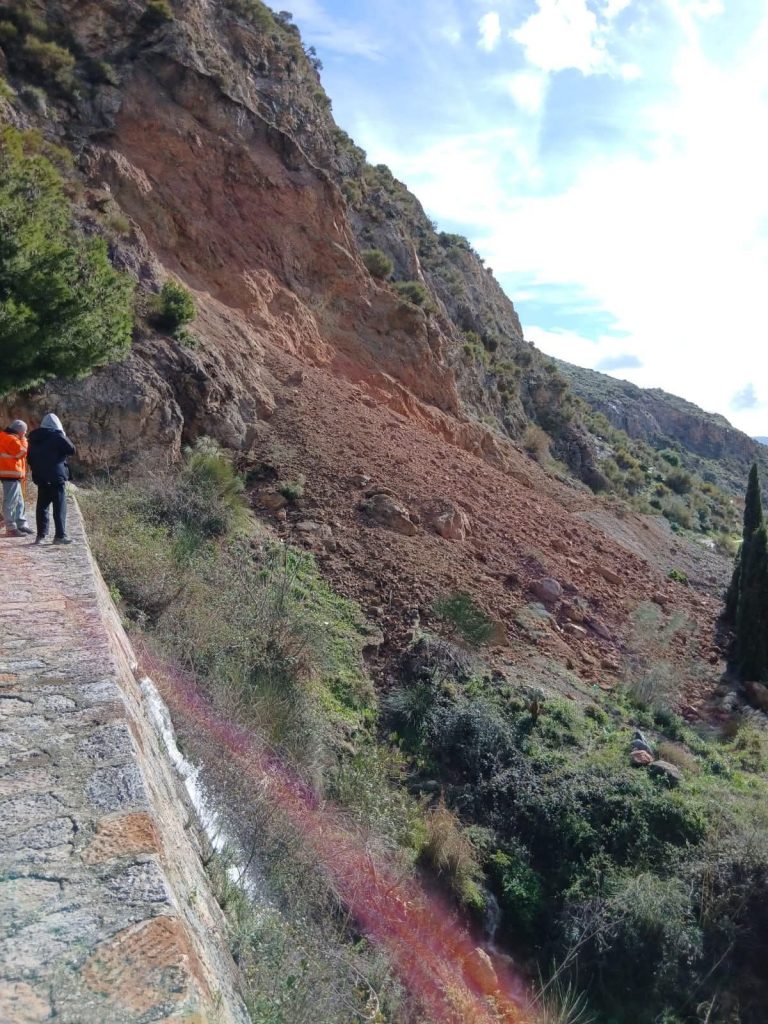
In Beneficio, with part of the terrain forming part of Orgiva municipality, disruption has taken a different form. Here, prolonged saturation of steep ground triggered a landslide that cut the access to some residents. The shows that the risk isn’t just riverbanks alone. Once slopes are destabilised, they can remain hazardous even after rainfall stops.
Repairs and responsibility
Across rural Granada, frustration abounds. Tracks cleared or rebuilt (for now!) have already been hit by subsequent rain, while riverbanks and slopes remain exposed.
Then there is the division of responsibilities. Under Spanish water law, riverbeds and their immediate surrounds are overseen by the river authority (SAIH Hidrosur). Local town halls do not have full authority to carry out permanent repairs close to watercourses.
Emergency or provisional works can be done to restore utility access or safety (such as piped water). Permanent repairs, however, usually require formal sign-off, involving technical reports, flood-risk assessment, and coordination between the town hall, the river authority and, in some cases, the Diputación de Granada or Junta de Andalucía.
Even when all parties agree that “something must be done”, official authorisation can take several weeks. More complex solutions – such as relocating a track away from the river or redesigning it to cope with future floods – can take several months.
Dams under close monitoring
Downstream, reservoirs across the province remain under close monitoring. The Rules dam on the River Guadalfeo, and other major reservoirs, are at capacity. This has resulted in controlled releases of water, following the storms. Authorities claim these measures are precautionary and part of normal safety protocols when reservoirs approach high capacity.
For communities living downstream, cascades of water being released is a cause for anxiety. In parts of Malaga province, evacuations have occurred – such as in the Ronda region.
The Rules Dam discharge has caused a “flood plain” on a popular recreation area of Velez de Benadualla.
Sierra Nevada resort – problems with recent storms
Higher up the mountain, the Sierra Nevada has accumulated a substantial amount of snow. Rapid melt has contributed to sustained river flows below, while a series of storms has increased the “agua” running in the zone.
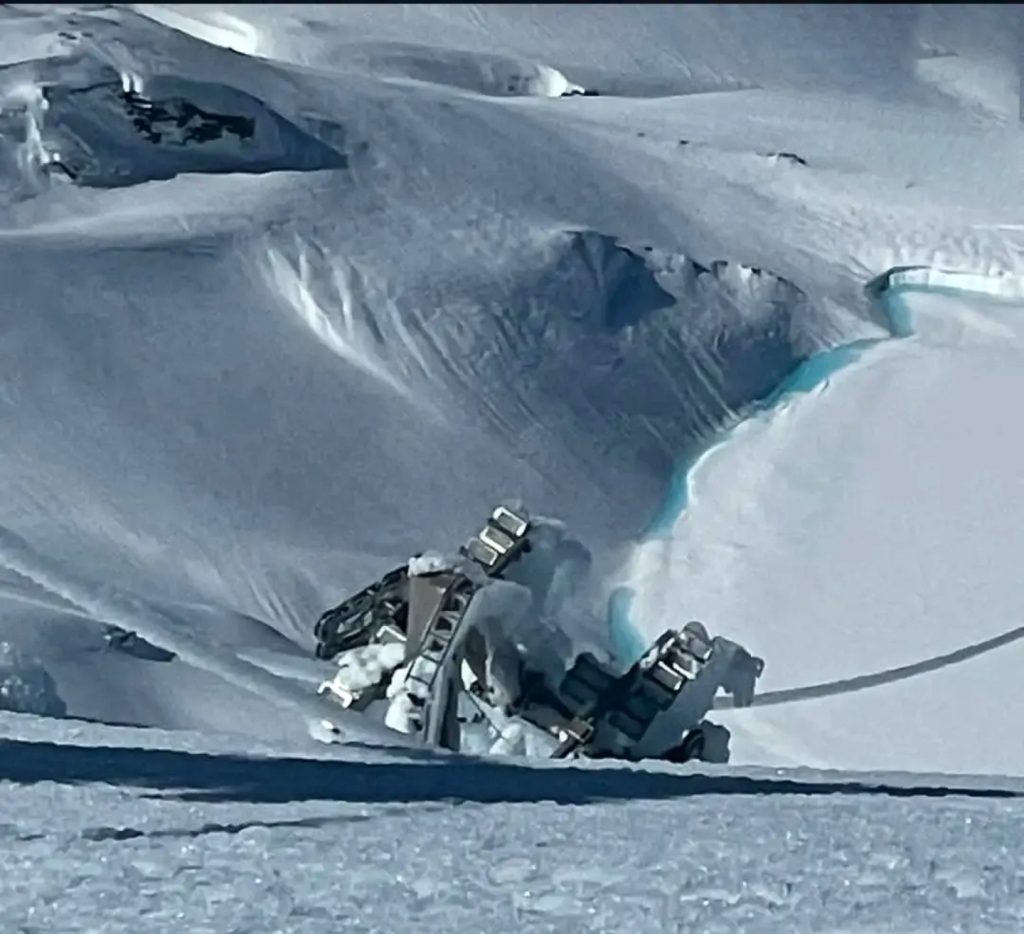
The Sierra Nevada ski resort has announced the inspection of lift cables following weather-related incidents and disruption. In simple terms, things are broken!
What AEMET says comes next
According to the AEMET, the current sequence of named storms has almost passed, but conditions remain unsettled. Even if spring is “round the corner”, it might not be yet! Don’t put the wellies away!
Across Granada region, the issue is not just the storms themselves, but whether repairs to infrastructure can withstand future events — and whether Spain can adapt to extremes of weather.