Part II in our “fascinating!” series on how to attend a major Spanish fiesta while missing the attractions…. a speciality of the intrepid (and sometimes inebriated) Calamity Jo, who peaks too early or starts too late….
GRANADA region, in January, is ripe for winter festivity – whether it’s après-ski with DJs at the Pradallano ski resort (if you have 500e to burn) or locals congregating around a fire in the village plaza.
With the weekend of 16-18 January dedicated to the fiestas of San Antón (patron of animals) and San Sebastián (patron of archers and town councils), cultural observance doesn’t necessarily mean being in the “correct” plaza (or the correct town) at the correct time. Or being present at all….
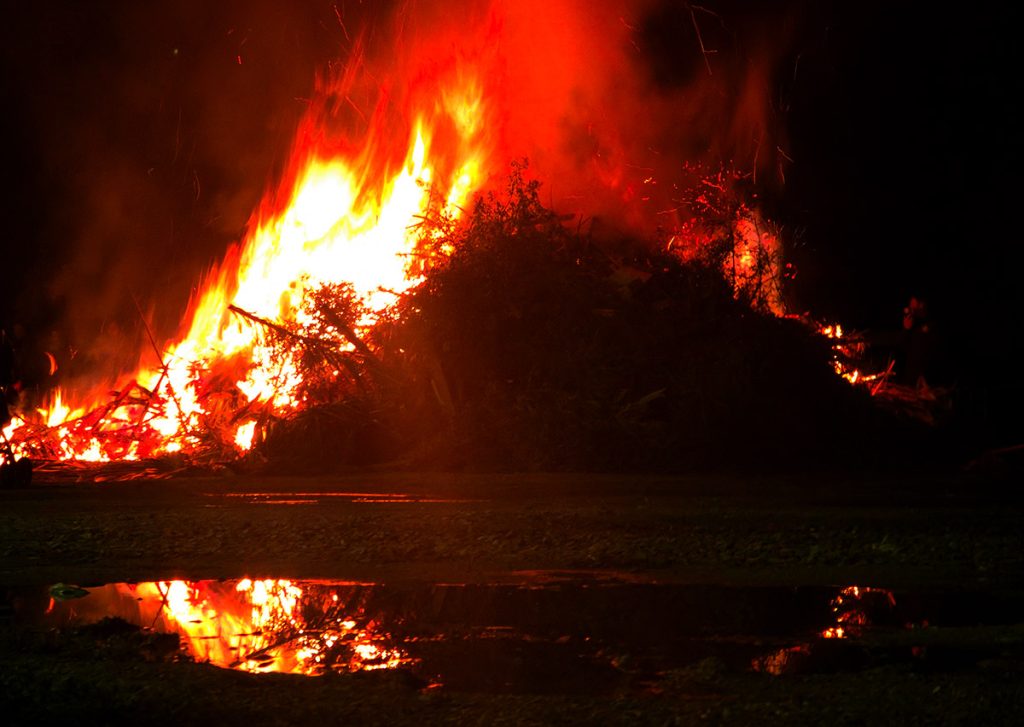
San Antón involves bonfires, pruned olive branches, and grilled ‘chorizo’. San Sebastián is all about processions, banners, and brass marching bands. This year’s saintly (for some!) weekend demonstrated that you can “soak up the vibe” through distantly-viewed fireworks, smoke plumes rising from neighbouring villages, and other people eating their sausages directly beside you.
A bit of history… and Torvizcón thwarted again
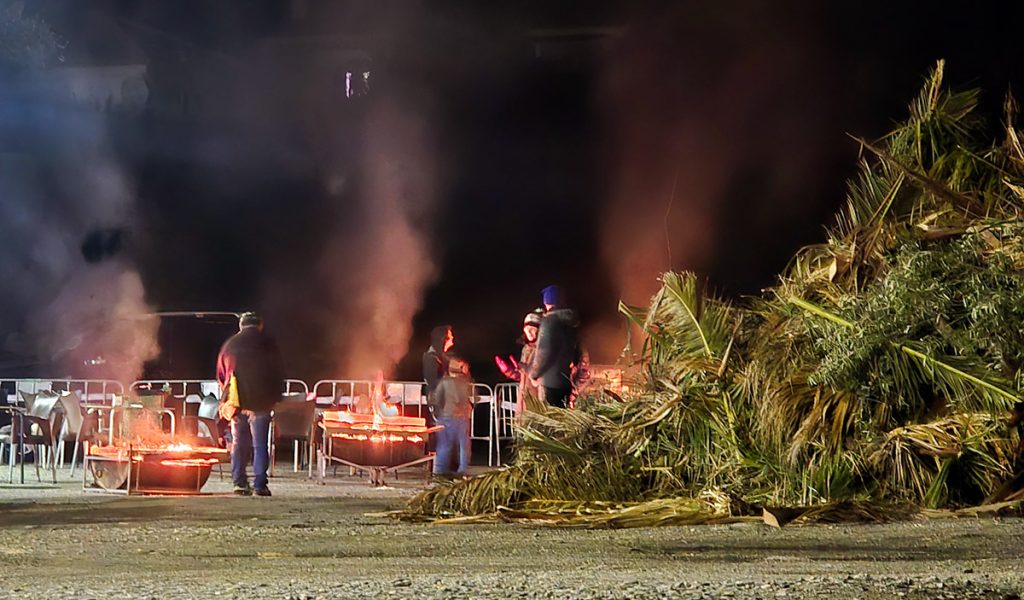
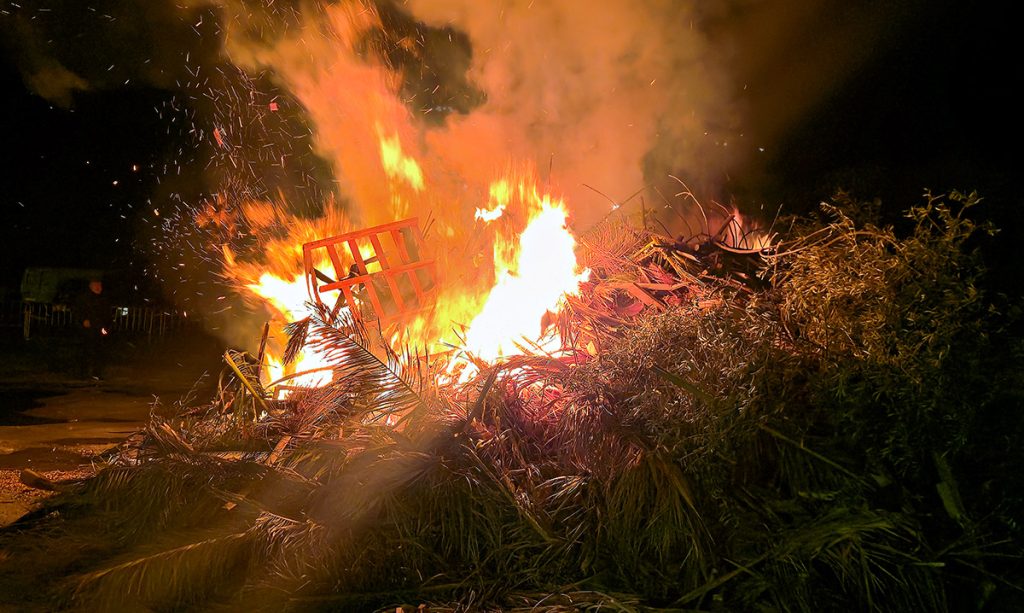
San Antón honours Saint Anthony Abbot, patron saint of animals and livestock. Historically, people believed that bonfire smoke purified pigs and stables against disease – important considerations before the age of antibiotics and pesticides. The ‘hogueras’ (bonfires) existed for a practical reason. Mid-January is pruning season for olives and fruit trees. This produces unwanted branches/cuttings that villages burned collectively. The smoke was believed to protect livestock and households from misfortune. Fire purified, smoke disinfected, and who doesn’t like a warm fire on a cold winter night?
Even today, towns burn the same combination of olive branches, pruning wood and winter vegetation – with a few pallets thrown on the blaze for good measure. The custom survives because San Antón lies on the fading edge of winter, and the cusp of spring.
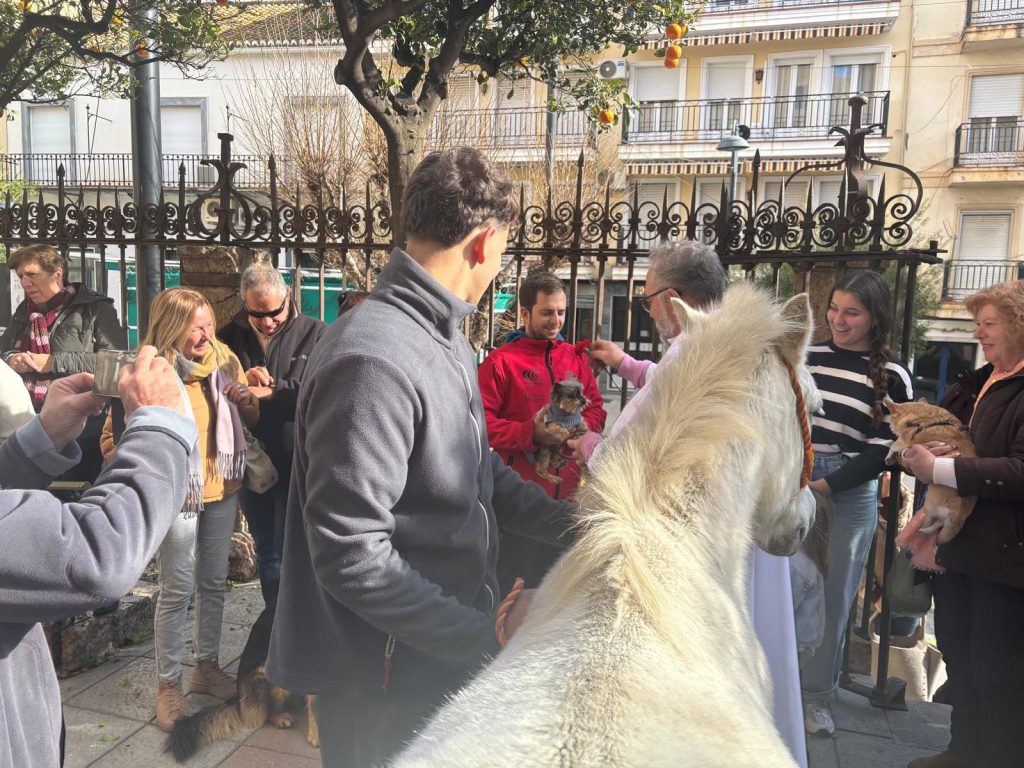
Modern Granada adds a theatrical component: as well as burnt sausages, there are priests patting donkeys and blessing dogs; and drunk people circulating close to bonfires for their latest Instagram pic. The event is lively and photogenic – provided that you attend on the correct night and don’t get a huge ‘chispa’ on your feather-filled puffer coat….
The most exciting regional fire fest is held in Torvizcón, on the north flank of the Contraviesa. Several years ago, Calamity Jo was accused of being a “sh*t journalist” for muddling the night of the fire spectacle. For those not in the know, it is on the FRIDAY, not the Saturday. On that unfortunate occasion, best forgotten, glasses were overturned, instead of fires being photographed… and that full story will never be told in public again!
The Torvizcón event is now ranked of a fiesta of national interest”. It is worth attending. We’re sure it is! Next year will be a “roaring success” for Calamity.
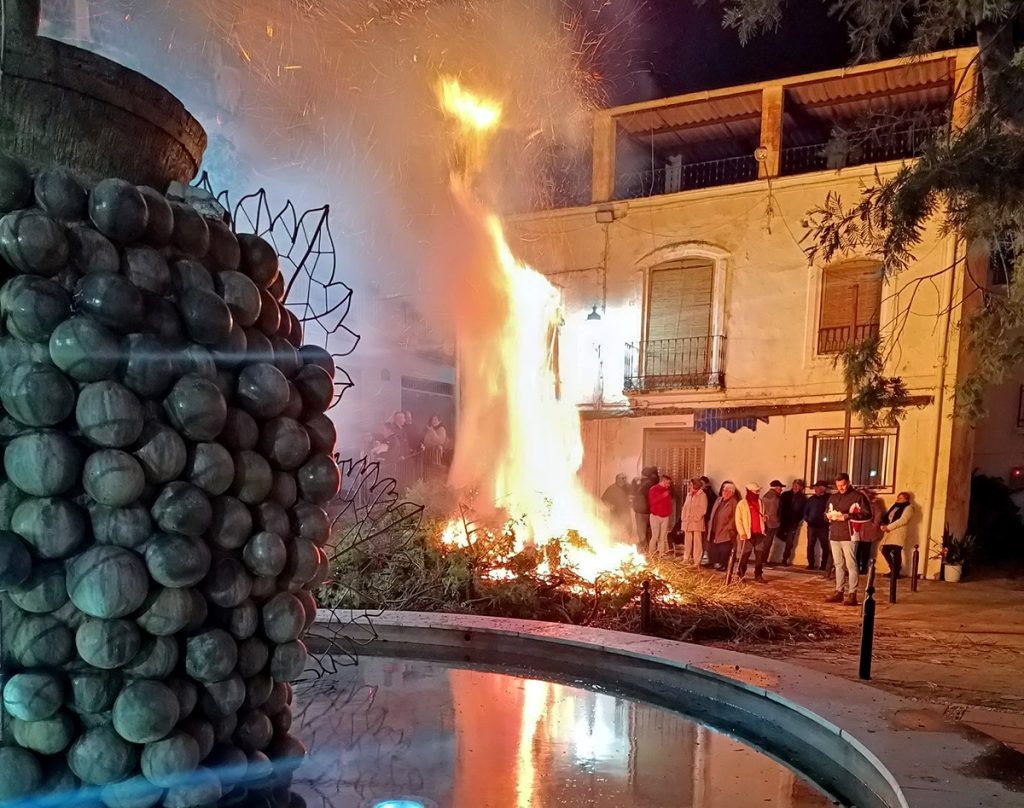
Luckily, other towns – including Órgiva, Tablones, Soportújar, Pitres and Mecina Fondales – all have their own fire festivities. Some occur on the Friday; others the Saturday. Be sure to find a programme on the ‘ayuntamiento’ website and study it carefully.

Badly-timed birthdays…
While Granada basks beneath a shower of ‘chispas’ (sparks), fireworks, and grilled sausage. the Calamity Family celebrates two birthdays in the same week. This is fortunate or unfortunate, depending how you view the timing!
These birthday fall between the doldrums of Christmas ending (post-Three Kings) and the excitement of San Anton commencing. One birthday started prematurely the day before it was due, which might not have been the best plan. On the date itself, the initial party venue was ruined by Bruno, a huge puppy who should be called Brutus. He upended a glass of wine with a single, catastrophic table sweep. His ban was courteous but decisive. Plan B involved a village bar which shut at 8pm – just as we entered.
In retrospect, don’t try to celebrate your birthday on a deep-midwinter Monday with a fire festival just round the corner. Equally, a big Dub party was missed, as Calamity doesn’t drive to parties herself. More to the point, she accidentally offended a semi-famous producer exactly a year ago. Was it safest to view a nice, quiet ‘hoguera’ or eat a sausage at home?
Snow makes San Anton special: fire and ice
Snowfall added a further fun element to the weekend. The Sierra Nevada received a sprinkling that filled winter sports enthusiasts with delight and remained on the south flank (the high Alpujarra) until at least midday. Calamity slept through the white blanketing, but saw a few patches at the roadside.
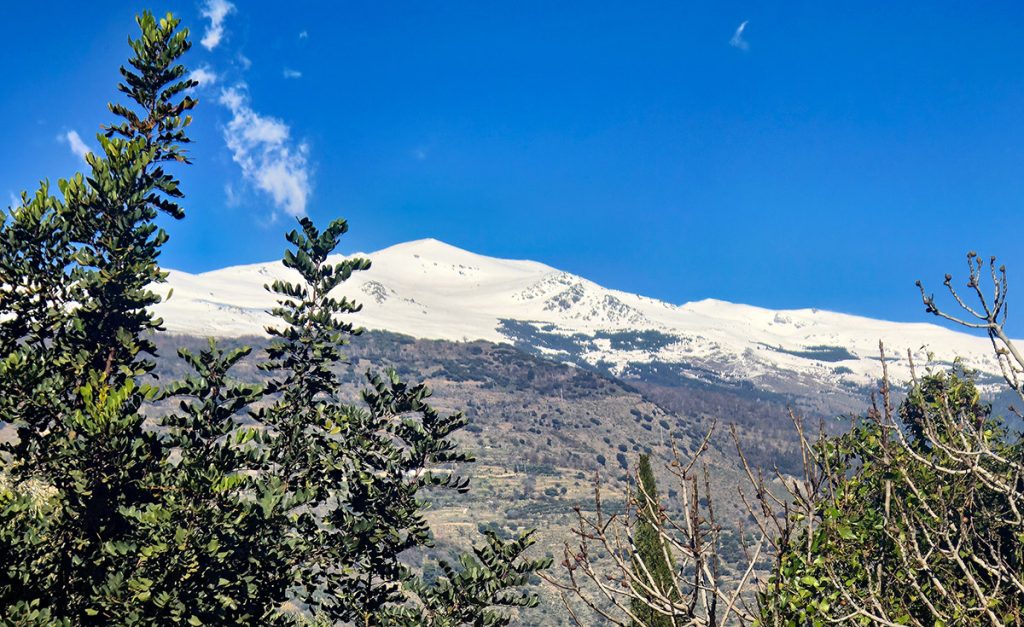
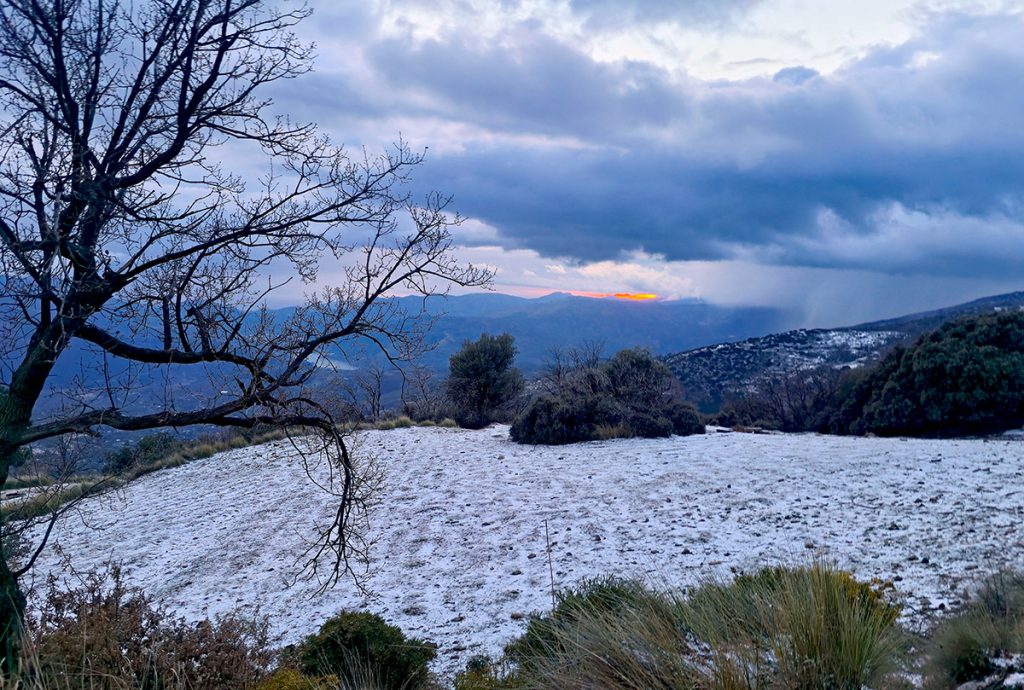
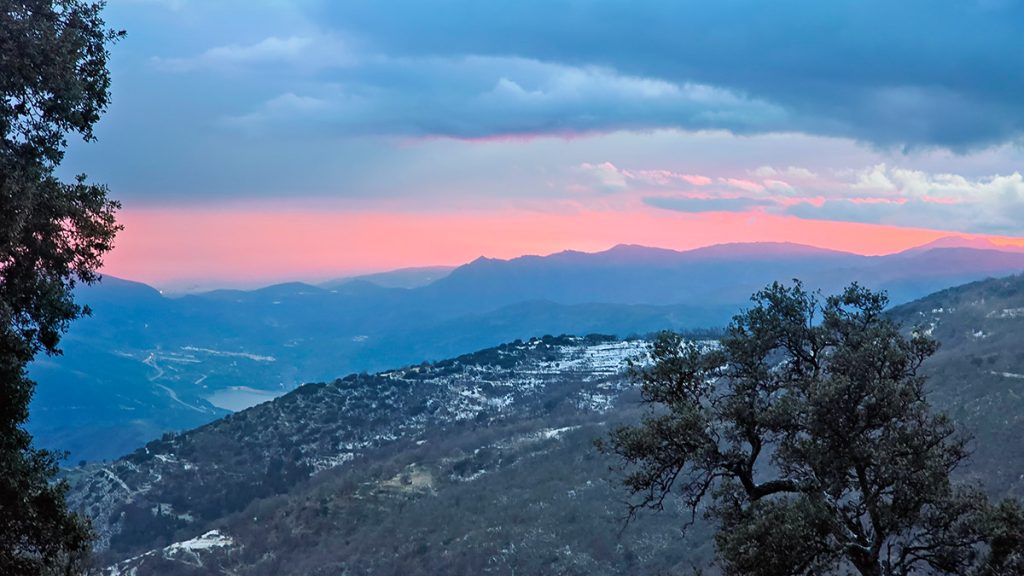
Having largely missed the snow, Calamity headed down to Órgiva to view a nice, warm bonfire. Unfortunately, the ‘campo’ dogs escaped and ended up in the pickup truck, along with Brutus. Were they waiting for a special blessing from San Sebastián? They were almost in luck, as Calamity’s notoriously hard-to-turn pickup became wedged by a procession walking down a back street. There are many ways to honour a local saint. Performing a weird reverse maneuverer while clergy and musicians advance at walking pace is not recommended.
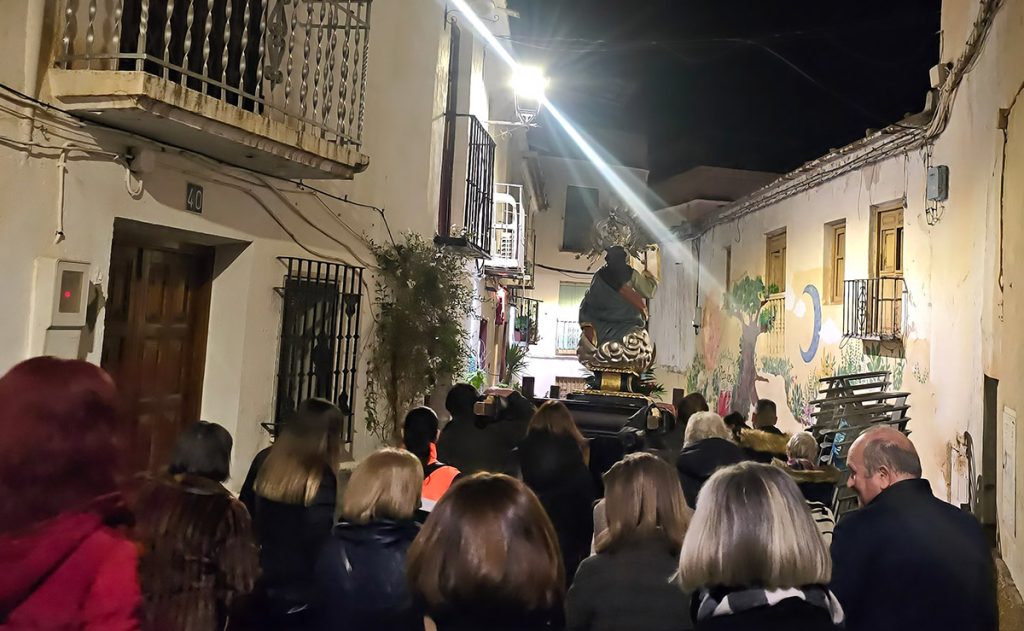
In Spanish, there’s an expression – “cortar el rollo” – to cut your role’; i.e. terminate any fun. The dogs had to be taken home, after a brief glimpse of a ‘hogeura’, and before any serious fireworks started (not that they looked bothered with all that meat around!).
OK, so the Órgiva event was actually experienced IN PERSON. The scene resembled Bonfire Night in the UK, transposed into the Alpujarras. However, without any Health & Safety cordons. People could wander marvellously close to the ‘fuego’ for their latest social reel. You could also witness the event from the car, which the dogs appreciated!
Soportújar suprise…
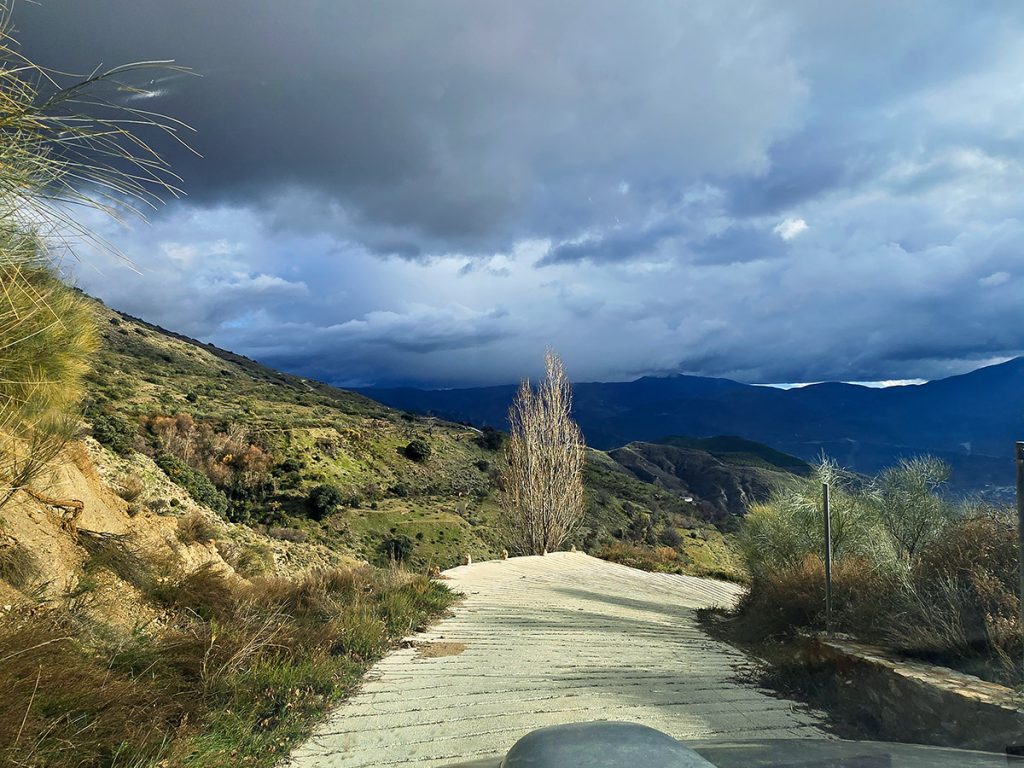
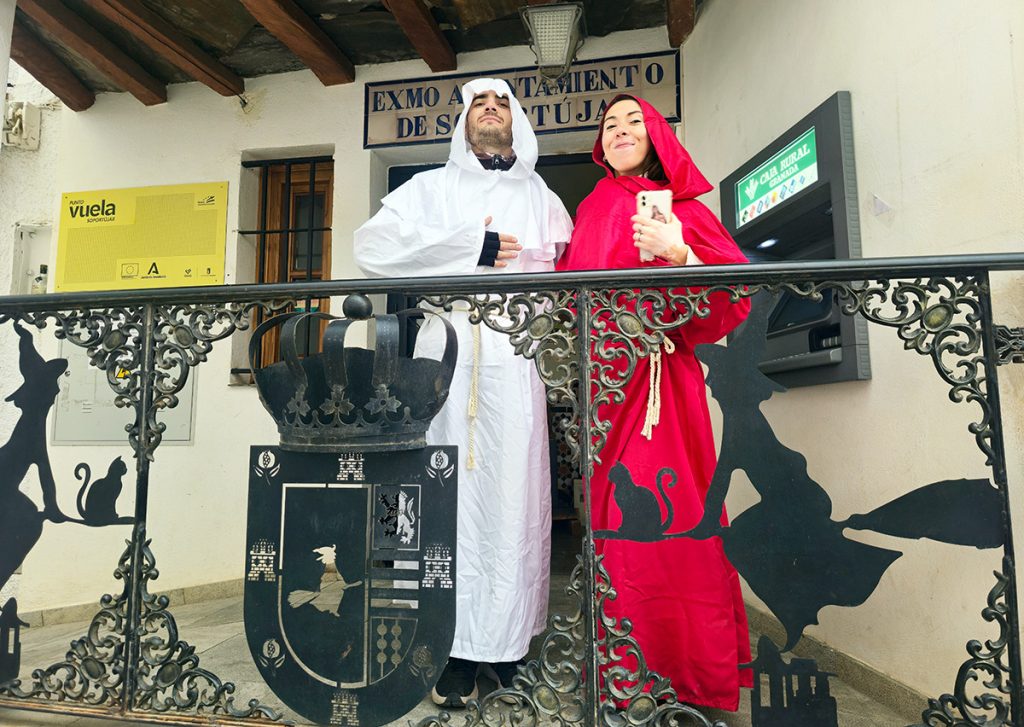
On Sunday, Calamity drove to the witchy town of Soportújar the “back way” – i.e. the notorious Caballo Park track that is arguably the region’s scariest rural pass. In the pickup, the extremely narrow hairpin bends are dangerous. However, filming some “highlights” (not while driving round them) somehow made it less intimidating. These reels are yet to be released!
The Soportújar fiesta program suggested paella and shutting a fox (?) inside some unknown enclosure. Instead of bonfires or sausages, Calamity arrived to find blindfolded young children smashing terracotta pots filled with confetti and sweets — a sort of rural piñata. There was, unfortunately no food available in town. A kind bar owner took pity and produced cheese, olives and other traditional Alpujarran fayre from a closed kitchen.
Calamity wondered where the “entierro de la zorra” had gone, and what does this event involve? In theory it is the symbolic burial or burning of a juniper branch, once used to fumigate animal pens and banish winter misfortune. Not, as Calamity imagined, a spectacle involving Señor Alcalde, or other town dignitaries, dressed in lupine costumes and being chased through the streets by residents.
As Calamity departed via the scary track (it’s fine going upwards!), a few flakes of unpredicted snow were settling in pretty forestral areas, providing the perfect end to a “successful” weekend.

Calamity interpretation of San Antón – burning the past!
Without a deep dive into the history of San Antón, Calamity imagined (or hoped) that the bonfires might signify “the burning of negative energy and casting out the failures of Christmas and January, so we can now enjoy 2026.” This proved wrong. Ah well.
However, there is no harm in imagining that the bonfires offer an annual opportunity to freshen up for February. Cast out the old: in with the new! Historically inaccurate but psychologically persuasive! After all, farmers burn fields before planting. There is definitely merit in burning the festive season and pressing “Erase and Rewind“.