
Jo Chipchase reports on the first earthquake she has felt since moving to southern Spain, and considers why “keyboard warriors” living nowhere near the epicentre in Granada City are telling residents it was “nothing”…
FOR the first time since moving to the Granada region, I felt the earth move at 1.04am on Saturday, August 15. A Granada earthquake finally gained my attention in all these years.
I was at a birthday soirée, at 1,800 metres on the southern flank of the Sierra Nevada, when a strange rumbling started. Was it the thunderstorm, forecast for that night? No. Had Bruno (my huge dog) knocked something over outside? No. There was definite movement of the earth. Everyone stopped and glanced up from their ‘cubatas’. Was that an earthquake? It clearly was!
In the past, I once stood on the forecourt of the Órgiva gas station during a previous, lesser, earthquake. I felt nothing. This time, there was no mistaking the odd sensation. I immediately went outside with my phone, seeking sufficient signal to search the exact details.
The assembled party didn’t share my interest. One guest pronounced it was “nothing” and added “well, we haven’t died!”
I explained, in Spanglish, that southern Spain is within a seismic zone where the African and Eurasian tectonic plates meet. This information was received with considerably less interest than an hour-long discussion (seemingly!) about what was bought in a local supermarket the previous day, who was in the bar, who spent what, and how drunk they were later that evening.
I also had to justify that showing a journalistic interest doesn’t mean you are hoping to discover dead people or collapsed buildings. I simply wanted to inform myself about what could be a significant local event.
Although birthday boy was slightly engaged, the conversation soon returned to grocery shopping – and getting hammered.

So, what happened with the Granada earthquake?
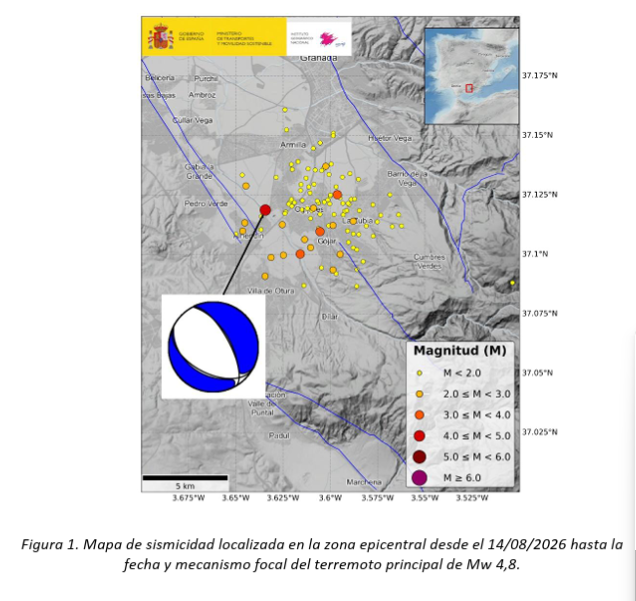
Reports showed that a magnitude 5.0 earthquake (conflicting assessments initially placed it between 4.8 and 5.2) had struck the Granada metropolitan area, with its epicentre at Alhendín, immediately south of Granada City. The Instituto Geográfico Nacional (IGN) later revised it to Mw 4.8.
Crucially, the Granada earthquake was very shallow. Initial information placed it at two kilometres below ground level, later revised to “less than 10 kilometres”. The shallow nature of the earthquake explains why it was felt so widely. More than 10,000 people reported it to IGN. Reports came from throughout Andalucía and further afield, including Madrid and Toledo.
The shallow depth also explains why we felt this Granada earthquake at 1,800 metres on the Sierra Nevada south face (La Alpujarra). Here, it was an interesting experience. Close to the epicentre, it was reportedly frightening.
A personal contact, based in Granada metropolitan area, described it as “very weird and unpleasant”. Something you would not want to experience again. They said that the buildings shook for 10 seconds – which seemed a long time – and that some people panicked and ran outside.
That is not a description of “nothing”.
Swarm of seismic activity surrounds the Granada earthquake
There had already been seismic activity before the main Granada earthquake. Around six hours earlier, a magnitude 3.7 earthquake was recorded close to this area. After the 1.04am earthquake, there were dozens of smaller tremors – “aftershocks”. These eventually de-escalated.
In total, around 100 events were detected in the seismic sequence, with the largest aftershock reaching magnitude 3.3. These were also at a shallow level.
Activity continued into Sunday, to the delight of the community. Around 20 more earthquakes were recorded during Saturday night and Sunday morning. Approximately half of them were felt by local residents. These occurred around Ogíjares, Armilla, Gójar, La Zubia, Churriana de la Vega and Alhendín.
The strongest was magnitude 3.1 at Armilla at 4.40am, followed by a magnitude 2.8 near Ogíjares at 6.27am.
What happened close to the epicentre?
Fortunately, with the Granada earthquake of 4.8 scale, there was no serious structural damage or reported casualties. However, there was damage to buildings and vehicles.
Granada City Council dealt with 445 incidents, including calls to Policía Local and the ‘bomberos‘ (fire service). By Sunday, 85 building inspections had been carried out. Special attention was paid to some buildings in Zaidín, where social housing blocks were affected.
Emergency officials reported falling cornices, broken glass, and cracks. Some residents were evacuated, as a precaution, before being allowed home again.
The Junta de Andalucia activated its emergency response and disseminated advice for citizens. The Grupo de Arquitectos Voluntarios de Andalucía, (GAVE), joined assessments of affected buildings.
The historic Alhambra in Granada was also inspected before opening to visitors. No significant earthquake damage was found.
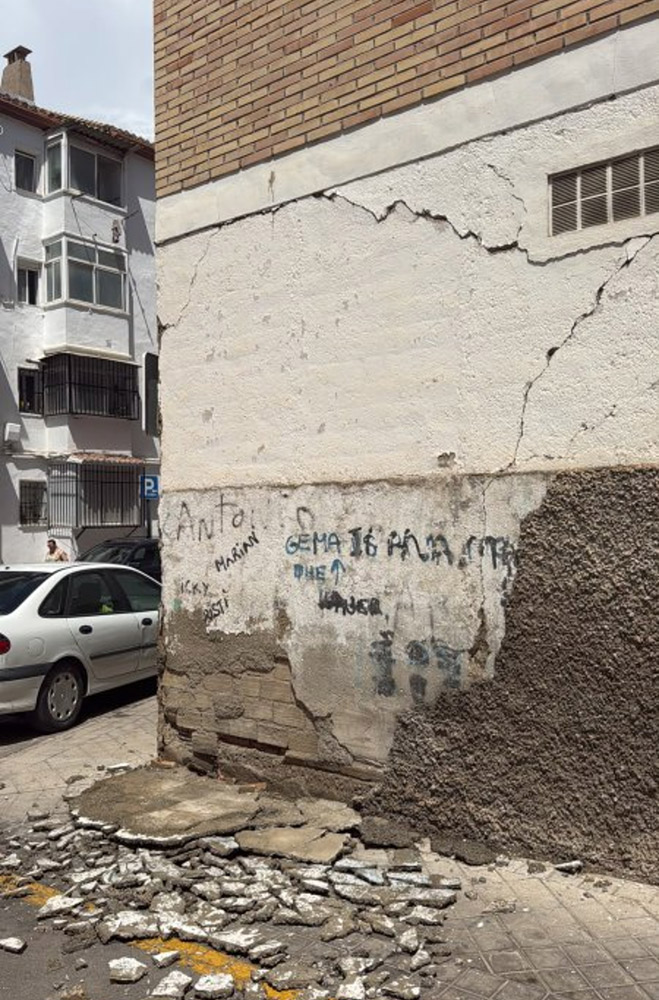
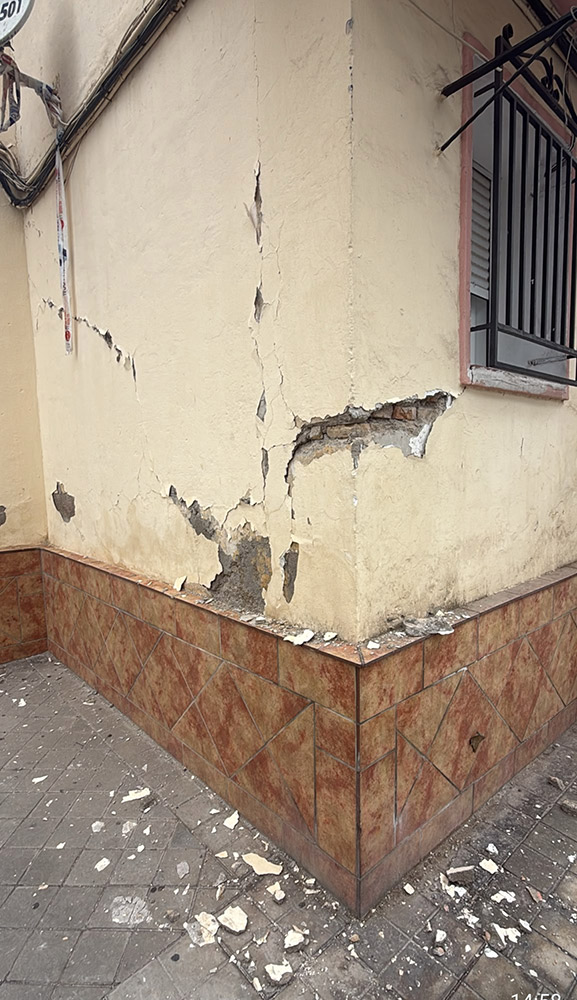
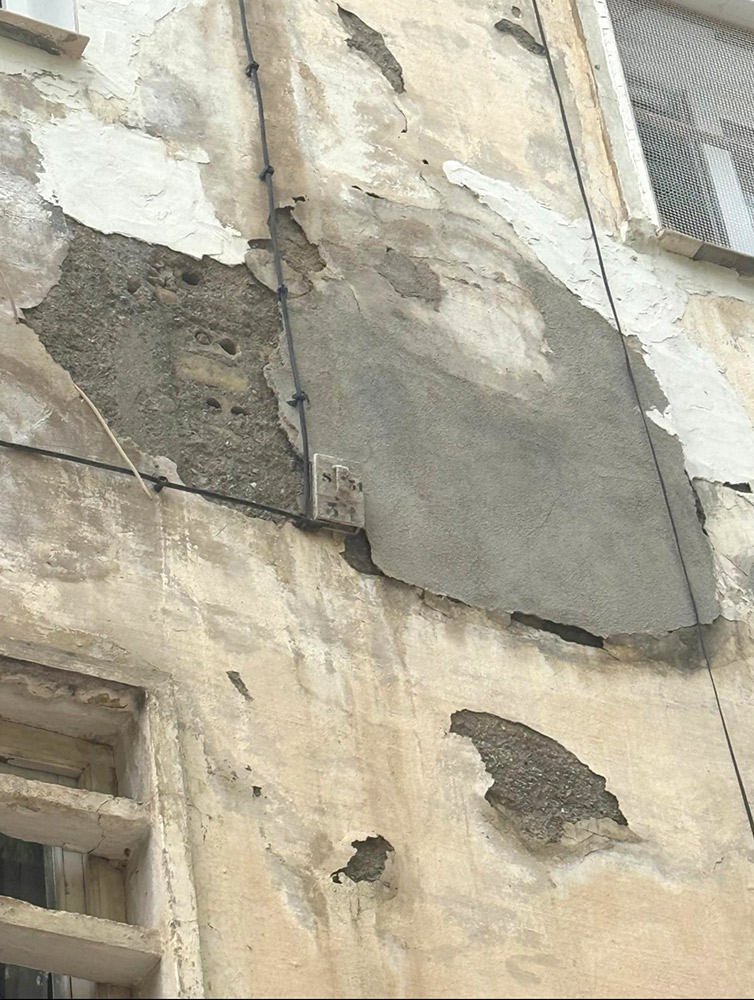
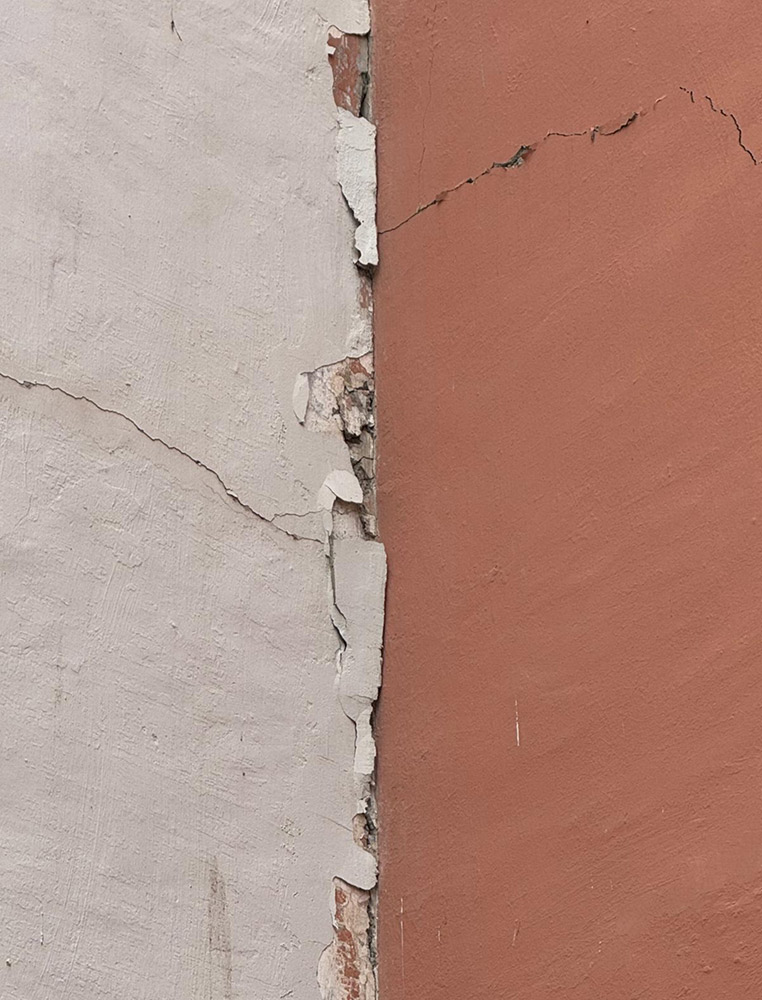
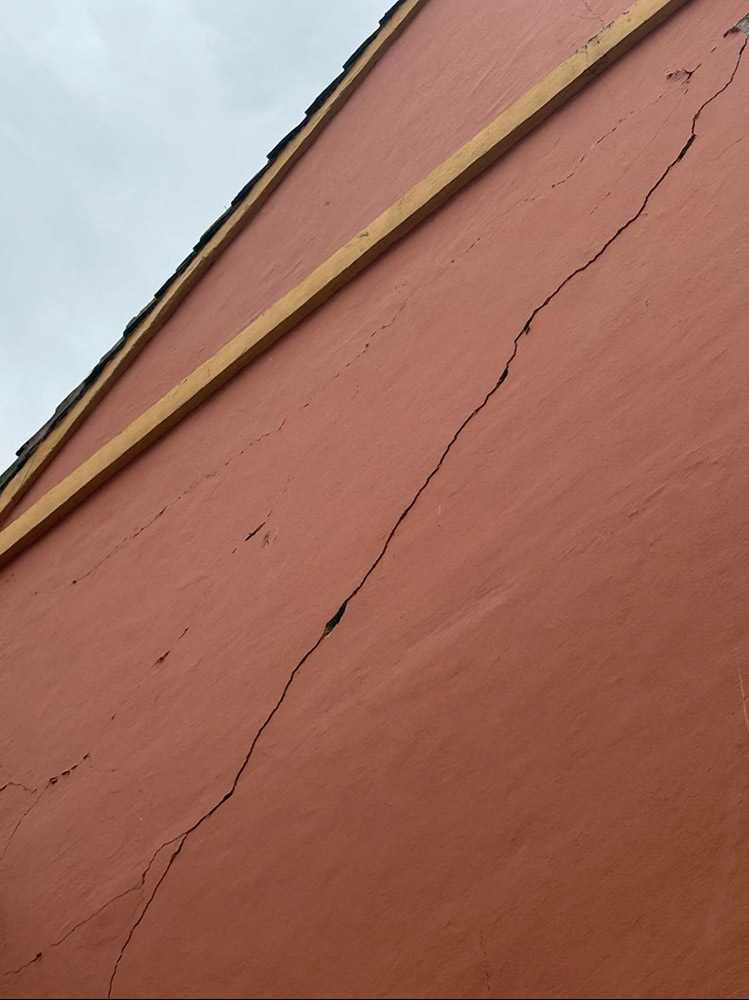
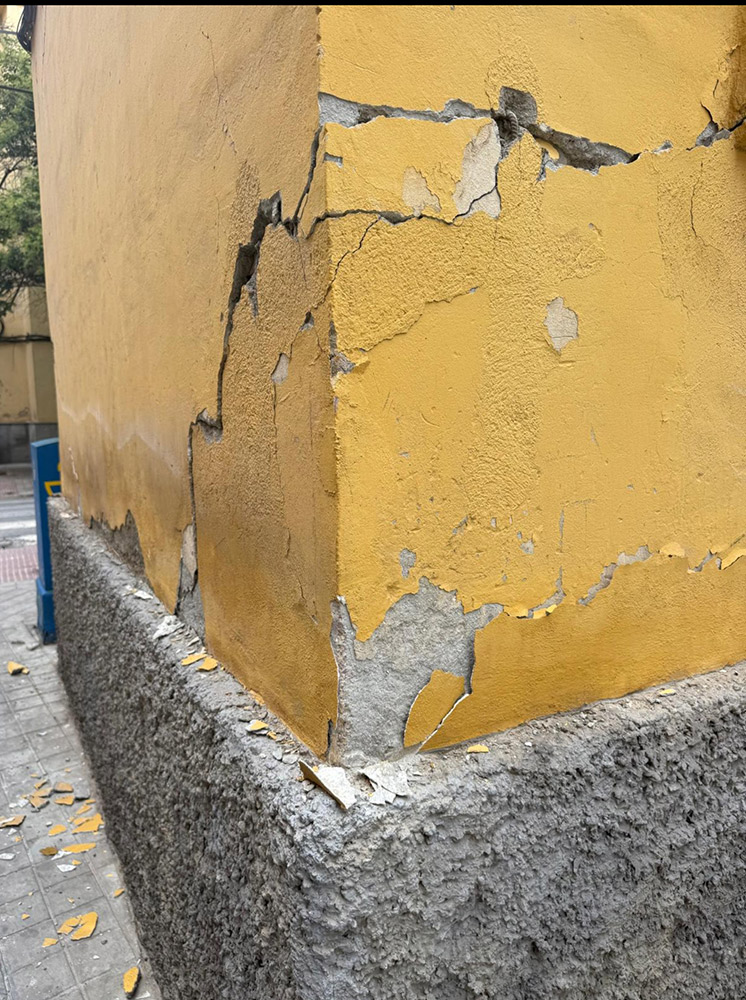
Photos of Granada Metropolitan area damage to residential buildings. Credit: Staff Reporter.
Magnitude is not a competition!
After the events of the Granada earthquake were reported – using facts – by experts at IGN, a plethora of opinions came from “social media seismologists.” Of course they did! Just as we have “expert opinions”, these days, on everything from viruses to Middle Eastern politics.
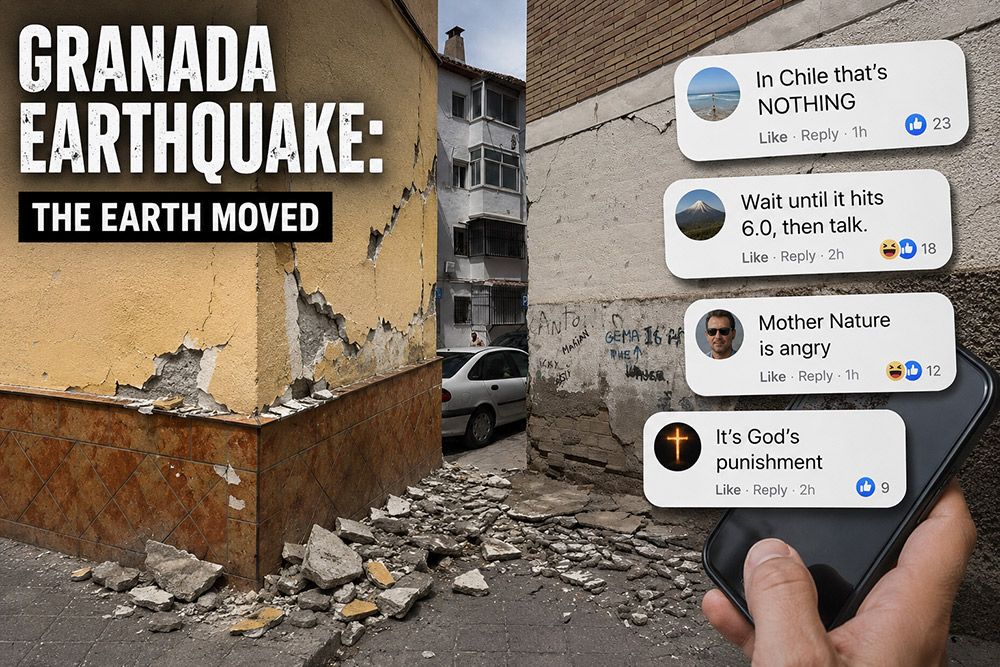
‘Tonterías’ about the Granada earthquake included: “In Chile that’s nothing”; “it’s not an earthquake – it’s a seismic movement”; “With that thunderstorm afterwards, Mother Nature is angry”; “God is angry”; and “I live 60km away, and it was nothing”.
For those of who listened vaguely at school, thunderstorms are atmospheric phenomena. Earthquakes, meanwhile, are caused by geological stresses within the Earth’s crust.
The familiar term, “Richter scale”, remains in everyday parlance, although the IGN calculated Saturday’s earthquake at Mw 4.8 using moment magnitude. If we look at the Richter scale, an earthquake of around 5 magnitude is considered “moderate”.
More importantly, magnitude alone doesn’t define what people experience. Depth, distance from the epicentre, local geology, and building construction all matter. A shallow earthquake, close to a densely populated area, can produce substantial shaking – even if it would be regarded as milder elsewhere, such as in the middle of the Alboran sea!
Hundreds of people ranking the earthquake from their distant armchairs were demonstrably NOT present at the epicentre. It is insulting to local residents — who actually experienced shaking buildings and had to go outside while damage was assessed – to downgrade their experience to “nothing”.
What causes Granada earthquakes?
The explanation for Granada earthquakes lies in the convergence of the African and Eurasian tectonic plates. Southern Spain and the Alboran Sea form part of a deformation zone between the two plates. Africa is moving slowly northwards towards Eurasia, creating stresses across a network of faults in southern Spain and beneath the Alboran Sea.
Lots of seismic activity occurs beneath the sea. The IGN describes the Alboran region as one of the most seismically active parts of the western Mediterranean. Most of the earthquakes occurring here are shallow and of low to moderate magnitude.
Sometimes, they occur in remarkable numbers. According to IGN, a seismic swarm in the southern Alboran Sea, beginning in 2021, produced more than 7,000 recorded earthquakes by November 2022, although most were “tiny”.
However, this zone is capable of larger events. The 2016 Alboran seismic sequence included a magnitude 6.3 earthquake.
So, earthquakes beneath Granada, Almería, and the nearby Mediterranean are not rare events. The African and Eurasian plates have been converging for much longer than social media armchair warriors have been speculating, creating conspiracy theories, and posting nonsense!
Past Granada earthquakes have proved deadly
Thanks to the plate tectonics, Granada is one of the most seismically active areas of the Iberian Peninsula. The regional history warns against dismissing earthquakes based on magnitude!
The most devastating quake was on Christmas Day 1884 – at Arenas del Rey, near Granada (home of the Planeta Bass festival). Estimated at around 6.5 magnitude, this earthquake devastated communities across Granada and Málaga. The IGN records between 750 and 900 deaths, with more than twice that number injured. Around 4,400 buildings were destroyed and another 13,000 damaged.
Arenas del Rey, itself, was devastated. Alhama de Granada, Ventas de Zafarraya, and surrounding settlements suffered catastrophic damage. Landslides and ground fractures added to the destruction. This remains one of the deadliest earthquakes in Spanish history.
There was also the Albolote earthquake of April 19, 1956. We can draw a comparison here to this weekend’s earthquake – because its magnitude was approximately 5.0.
The consequences were dramatically different. The IGN records 11 deaths. In Albolote itself, 41% of houses developed cracks, 35% were left uninhabitable, 6% were considered ruinous and 1% were destroyed. A modern academic reassessment also records 73 people injured.
The takeout is that two earthquakes can have almost the same scale, while producing different consequences. Clearly, this depends on their depth, exact location, geology, and the vulnerability of nearby buildings.
More recently, residents were reportedly made nervous (we won’t use the cliché “concerned residents”) by the prolonged 2020 and 2021 Granada earthquake sequence around Santa Fe, Atarfe and Cijuela, when thousands of shallow movements were recorded.
Saturday’s Granada earthquake was, thankfully, nothing like 1884 or 1956. However, history suggests that telling residents close to the epicentre that it was “nothing” is olive-stone-brained.
Are Granada’s buildings earthquake resistant?
Modern ‘edificios’ in Granada have seismic construction requirements, accounting for the hazard of the location, ground conditions, and the importance and type of building. Granada lies within one of the higher seismic hazard areas of mainland Spain.
Of course, the buildings have been constructed across decades – or centuries. Not all of them are “earthquake proof”, particularly given the city’s enormous stock of historic and traditional masonry buildings.
Fortunately, building inspections following Saturday’s Granada earthquake predominantly identified non-structural problems such as cornices, glass, cracks, and façade elements – rather than, for example, buildings collapsing.
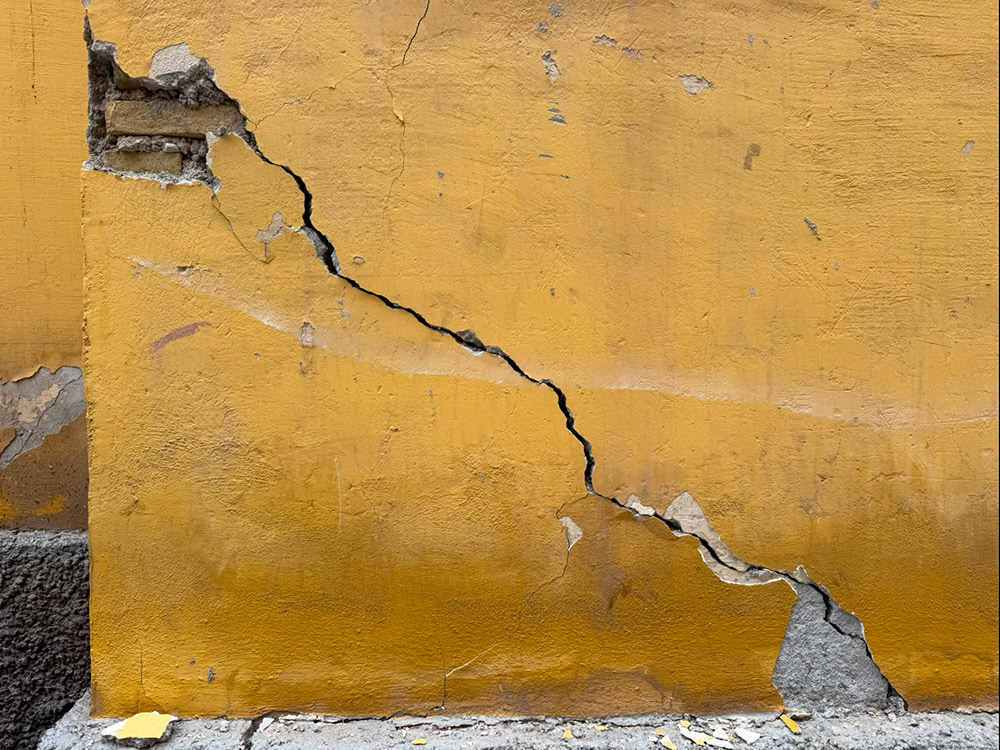
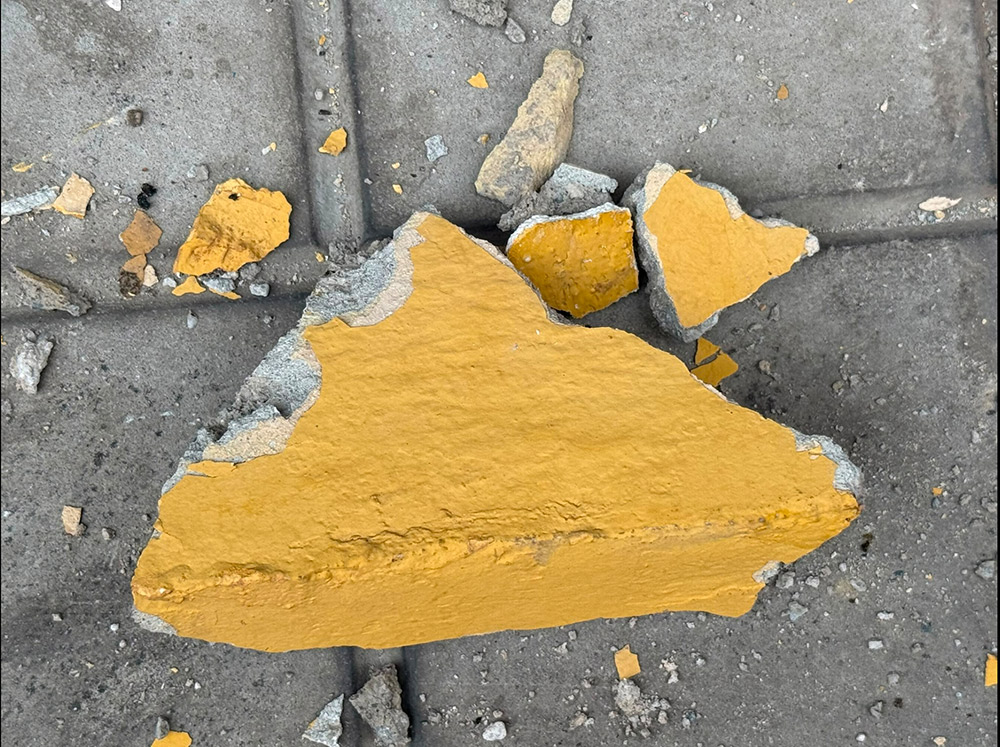
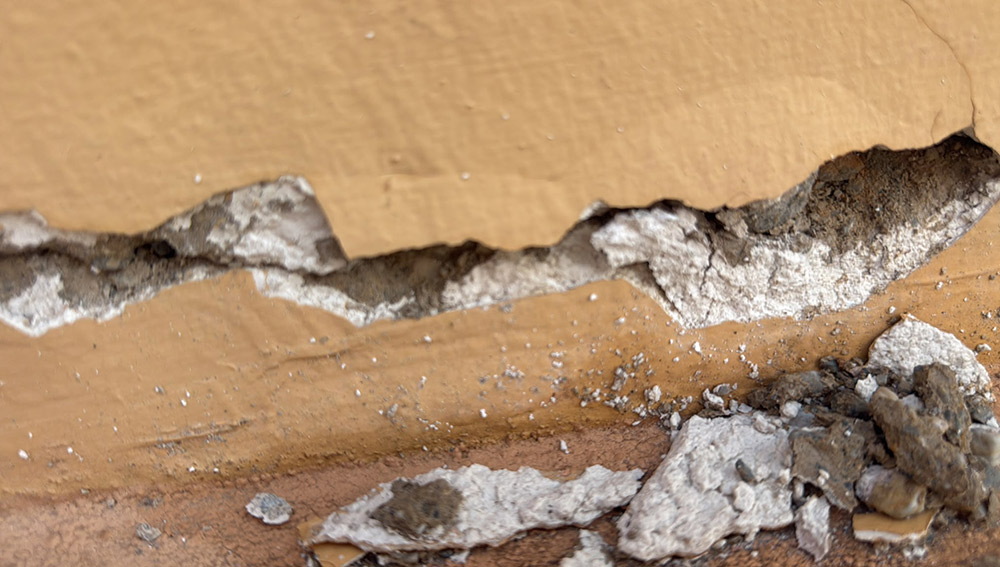
Credit: Staff Reporter
Tourists “fleeing” and other tabloid exaggerations
Some British tabloid media coverage of the Granada earthquake adopted the polar opposite of “it was nothing”. Reports focused on “terrified tourists fleeing hotels” and “earthquake striking Spanish holiday hotspot” (hmm!).
OK, there was genuine damage and genuine fear. This cannot be positioned as widespread devastation. More sensibly, Reuters reported damaged buildings and cars but no casualties or serious structural damage.
The true story was interesting – without turning it into clickbait nonsense that over-eggs the pudding.
With ground reports rating the Granada earthquake as significant and “weird”, it is important to consider science, facts, and eyewitness reports, rather than making daft remarks such as “we haven’t died yet” or “the Earth hates us and is fighting back”….
What to do during an earthquake
If you are indoors: Stay inside while the shaking is happening. Do not immediately run into the street, where falling glass, tiles, cornices, and masonry cause injury or even death. Move away from windows and objects that could fall, protect your head, and shelter beneath sturdy furniture (such as a large table), if possible.
If you are outdoors: Move towards an open area and away from buildings, walls, trees, streetlights, and electricity cables.
If you are driving: Stop somewhere safe, away from bridges, buildings, and overhead power lines. Put on your hazard lights and remain inside the vehicle until the shaking stops.
Afterwards: Expect aftershocks. Leave a damaged building carefully once the movement has stopped, avoid lifts, and do not re-enter buildings showing significant damage until they have been assessed.
For an immediate emergency in Spain, call 112.