
Jo Chipchase on how the rise of Artifical Intelligence (AI) in La Alpujarra has led to everyone’s publicity materials looking… exactly the same! Is the twee postcard vibe here to stay? Or will there be a backlash soon?
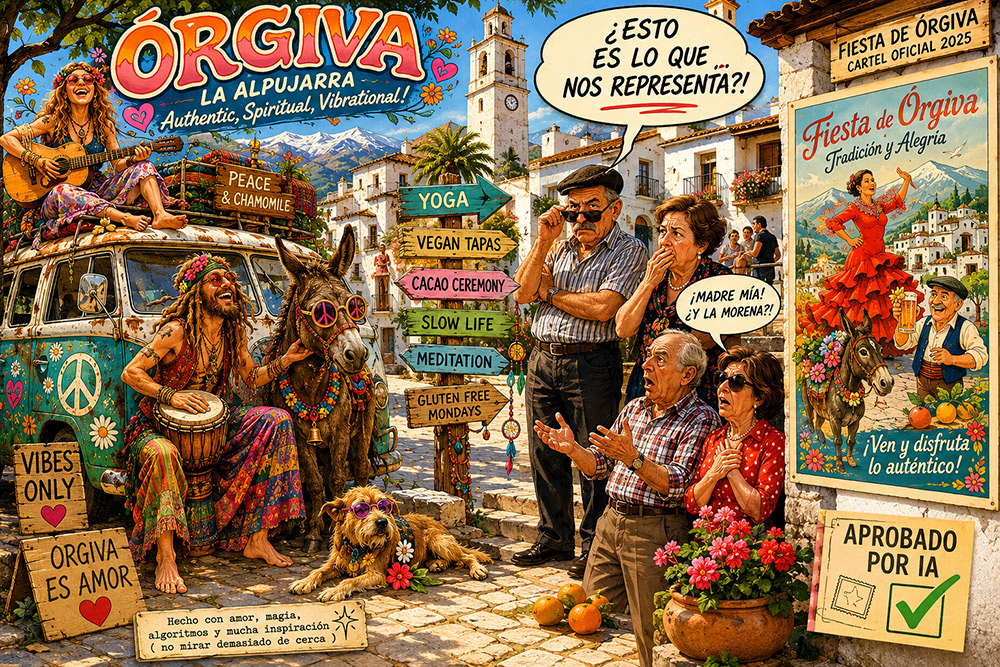
IF YOU spend time in La Alpujarra – or stalk it s social media forums – you’ll notice that something is afoot! Check what’s on in the area, and it seems that all local publicity materials have been designed by the same person. Have they? Not exactly! Whether it’s a ‘feria’ announcement, a restaurant menu, a summer concert, or a municipal outing, you’ll see the same smiling ‘campesino’ brandishing his beer, impeccable plates of tapas, and twee, whitewashed villages. Are we entering an alternative reality of Franco-era postcard art? Well, almost! Thanks to AI in La Alpujarra, most town fiestas are turning into a pastiche of their former self, with a rustic default font (or five) thrown in for good measure!
Chat GPT identifies this output as “vintage café style” and states that “the fonts… are all very common and are part of the design vocabulary that AI systems have seen millions of times”. Hmm!
This is arguably “AI 1.1” – when people first discover image generation, type a few words into ChatGPT, Midjourney, Gemini, Leonardo, or another platform, and proudly use the first result that appears. Then, they print this “default mode” image on to a two-metre-high banner for their business, without further thought.
The ubiquitous result is becoming impossible to ignore!
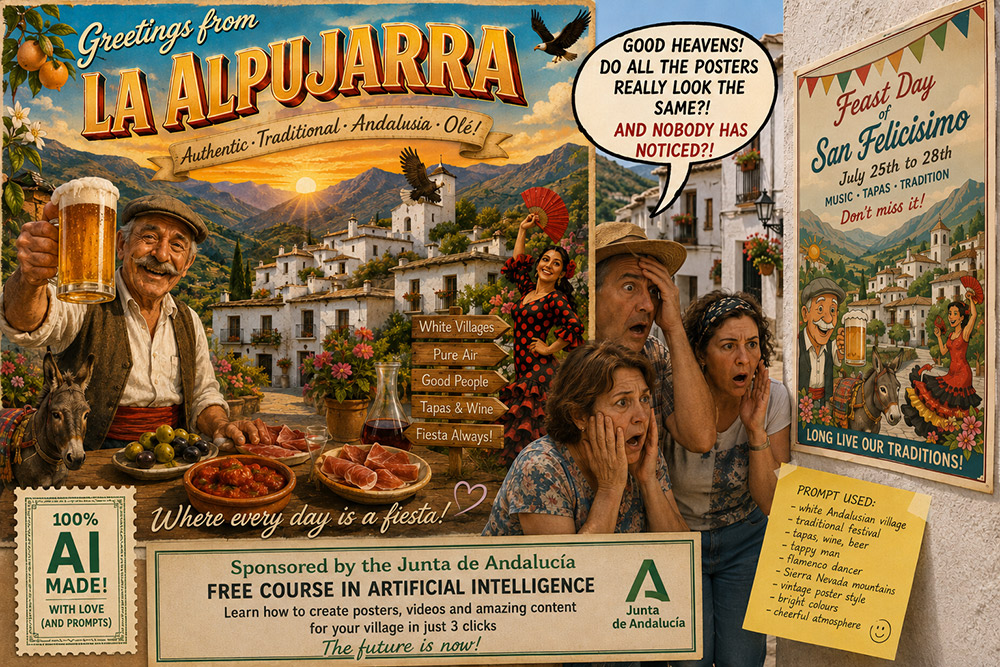
Common themes generated by AI in La Alpujarra
The concepts created using AI in La Alpujarra aren’t too varied! We have the familiar, cartoon-like scenes of rural Andalucía. The cheerful old man holding his ‘cerveza’ with glee. The flamenco dancer, straight from a 70s tourist brochure. The oversized wine glasses. The radiant sunsets. The village streets that look vaguely Andalusian but could easily be from high school mural somewhere.
There is news! You can upload your own photos to AI platforms. If your event is in Pitres, why not use a real photo of Pitres? If it’s in Lanjarón – which is strangely using an AI image for its San Juan 2026 fiesta poster – why not upload an actual photo of Lanjarón?
The technology is capable of adapting photos and producing photo-realistic output. The problem is not the software. The problem is that many users simply accept whatever result the AI engine produces first time round. Yes, the default option!
What began as a useful tool to reduce our workload is now creating a design monoculture.
From the magic to mundane
It’s easy to forget how quickly the “AI revolution” has happened. For members of the public with limited design skills, 2026 is seemingly a big year!
Arguably, AI in La Alpujarra (a rural environment, not Spain’s Silicon Valley!) was previously the domain of techies, and those who were sick of using Canva.
Historically speaking, AI image generation became mainstream around 2022, with systems such as Midjourney, DALL-E, and Stable Diffusion at the forefront. By 2023, it had exploded across social media. By 2024, it was appearing regularly on publicity materials throughout Spain.
The early AI images were easy to spot. People had six fingers. Text had mixed with hieroglyphics half way through a logo or sentence. You might generate “South of Granadda” or similar. Posters, therefore, contained non-words that nobody has ever seen before – and didn’t want to see again!
Today, most of those technical problems have been solved. Modern AI systems can usually produce convincing hands and render text with reasonable accuracy. The technology has improved dramatically.
Ironically, the biggest giveaway is no longer that deformed finger. It is the glib appearance. Too perfect and blemish-free. Either just a bit too photo-real or a tad cartoonish.
In a recent small poll on a local forum, 63% of respondents said they were sick of AI announcements, with many saying “they all look the same”.
The rise of the AI Superhero God
Images are only half the story. AI video generators are now producing short films and animated clips with remarkable quality. Used by skilled hands and open minds, these AI movies can be captivating and impressive.
One local creator, operating under the name Brutal Media, has released an ironic short movie called Memory Bliss. Produced over 45 days, and with part II to come, “it has a concept and a script” – which is not something you cannot say of every AI video. Especially those produced in rural valleys.
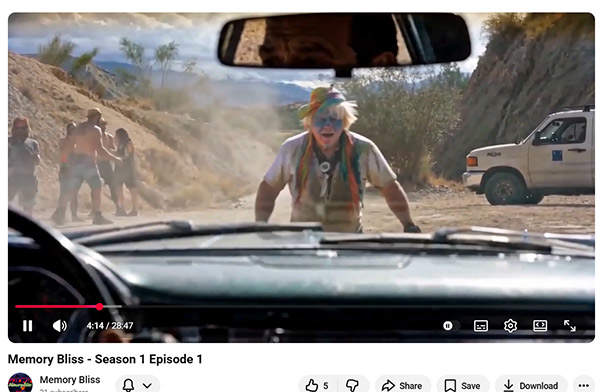
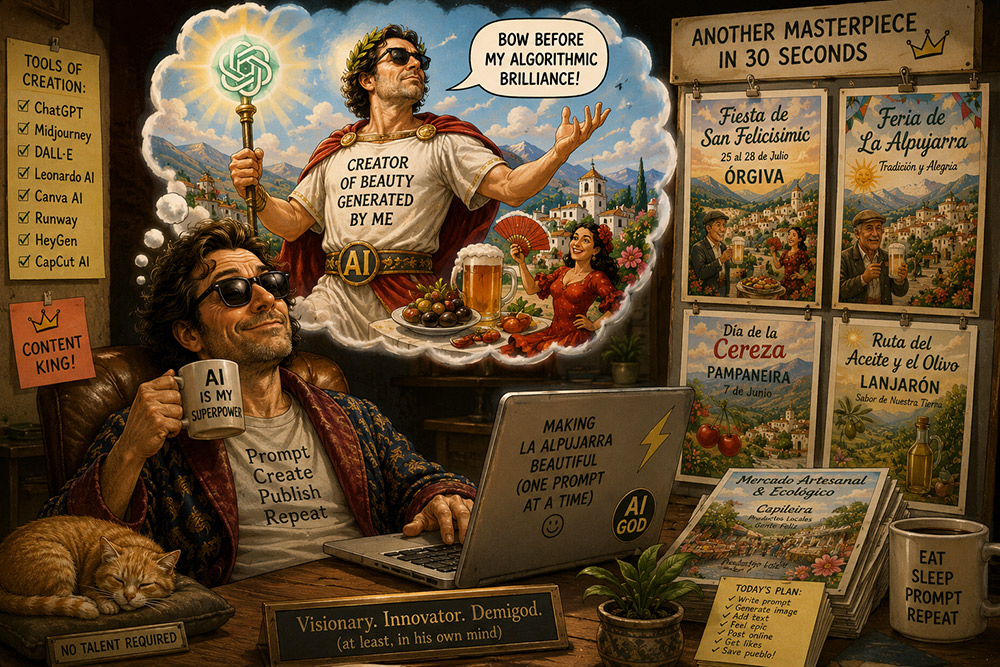
Unfortunately, some people use AI as an outlet for their Main Character Syndrome. With all the subjects that can be depicted, how could you resist performing an AI upgrade on yourself? Why not – you know – create an AI video portraying yourself as a cosmic lord?
A quick tour of AI in La Alpujarra reveals various fantasy epics. These transform ordinary individuals into superheroes, mystical warriors, prophets, kings, queens, star seeds, pirates, or divine beings. Unfortunately, the concepts of irony and dry humour aren’t included.
One common fault is for the AI to render images too dark and a tad ‘spooky’, like a Victorian-era opium den.
Spare a thought for the artists
It’s not all laughs about using AI in La Alpujarra, and beyond. The area South of Granada is know for its creative talent – especially in Órgiva, which is a true cultural melting pot.
Venues such as La Fábrica in Lanjarón and Nuestro Estudio in Órgiva showcase artists, illustrators, photographers, and designers producing original work using traditional skills.
Many spend days or weeks developing concepts.
These hardworking creatives then find themselves competing against somebody who typed “colourful feria poster, happy villagers, traditional tapas, rural Andalucía” into an AI platform, a few minutes before the submission deadline. The resulting image has taken seconds to produce.
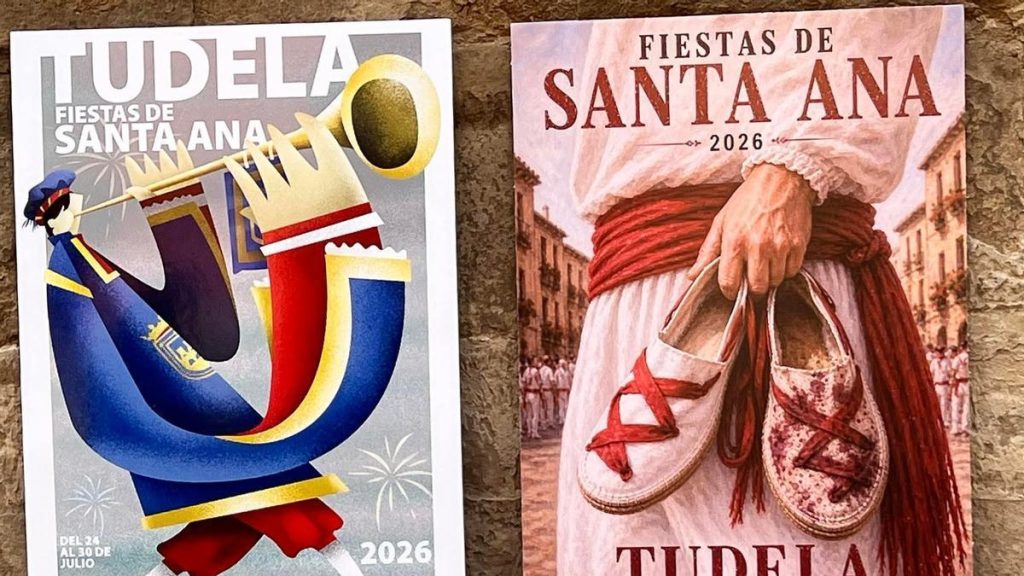
In Spain, controversies about AI-generated fiesta posters have already occurred. During May, in Tudela, the winner of a competition for the 2026 Santa Ana poster was disqualified for using AI, despite this being banned in the rules. The decision followed criticism from other artists who recognised tell-tale AI features in the work. Prior to this, the “artist” had received a 2,000e prize!
A separate category for AI?
This raises an important question. If municipalities will accept AI-generated competition entries, should there be a separate category for them? Away from the “real artists”.
This is the norm with many other disciplines. Photography competitions generally separate professionals from amateurs. Film festivals separate true-life documentaries from fiction. Why should AI-generated artworks compete against someone who spent three weeks painting an original piece?
Lucy Hayes Logan of Sabias Solutions in Lanjarón comments: “At the moment, we seem to be seeing a huge surge in AI-generated posters and images. In fact, a lot of people are saying, online, that the use of AI can turn them away from a business – especially when we’re seeing a sea of, essentially the same poster, just slightly modified to match whatever it’s trying to portray.”
She adds: “In the not-so-distant future, we might see a return to traditional, human-created promotional material, going back to basics.”
Welcome to the “Age of Slop”
Another growing phenomenon is known as “AI slop.” This refers to content created using a set formula. First, you generate an AI image (or series of images), an AI script, and use an AI voice program (such as ElevenLabs) to generate a voiceover. Next, you deploy an editing program to marry these elements together. Upload.
Today, entire YouTube channels operate using this model. Popular examples include Snoozorian, Boring History and dozens of copycats. Whether it is “what happened in Victorian workhouses” to “the life of a laudanum addict”, the result is repetitive and not entirely informative. Frequently, the narration contains strange pauses, incorrect emphasis on words, and odd pronunciations – because the output was never revised by a human.
The result is industrial-scale content production to earn maximum revenue. These “boring” videos encourage lucrative long watch times – because people literally snooze to your content!
The race to the bottom accelerates.
Will there be a backlash?
History suggests that every technological revolution eventually produces a counter-revolution.
Digital photography did not kill film (at least not a photography school). Streaming did not kill vinyl. Mass-produced furniture did not eliminate handcrafted items or the “shabby chic” sector. Shein hasn’t murdered the market for genuine vintage clothing.
In fact, each “upgrade” has made the handmade alternative seem more valuable. Look at the raging debate on social media about vinyl DJs having more skills than those “with a pendrive and autosync just plessing play”. The same may happen with AI.
As generic AI posters become commonplace, original artwork may become more desirable. As automated narration spreads across YouTube, audiences may increasingly seek creators with authentic voices. Some are already saying, at the start of their documentary, “narrated with my own voice”.
As for AI in La Alpujarra, when every feria poster is identical, the one that doesn’t match might attract more views/visitors.
But really, AI itself is not the problem. Used thoughtfully, it can be a genuinely creative tool or a virtual personal assistant, saving hours on an otherwise repetitive and time-consuming task.
Used lazily, it generates noise and sinks your publicity materials to the bottom of the pond.
The technology is improving every month. Whether the users improve at the same rate is questionable!
However, this use of AI is modish and – like with all trends – people may turn round in two years time and say “that banner we made is so 2026; it’s so embarrassing”.
CREATIVE CORNER:
How to make an AI poster that stands out
- Upload photographs of your actual village instead of describing a generic one.
- Use your own fonts rather than the default options.
- Mix photography, illustration, and AI elements together.
- Edit the image afterwards using traditional design software.
- Avoid clichés such as “giant tapas, flamenco dancers and magical sunsets” – unless they are genuinely relevant.
- Ask the AI to imitate a specific artistic style or genre of artwork, rather than accepting the first result.
- Double check written text and count those fingers!
- Most importantly, do not publish the first version the machine produces!
- Do not pass off your AI art as handmade art!