
As the sequence of Granada earthquakes grinds into another night, Jo Chipchase asks if enough is being done for “concerned residents” – or whether the absence of practical information is leading to speculation and displacements...
AS NIGHT falls over Granada again, some residents face an uncomfortable decision: go back inside their homes or spend another night outdoors in case a banger suddenly hits.
After the 4.7+ magnitude shakers of Tuesday 18 August – following the initial 4.8 magnitude event of Saturday 15 August – drove people into the streets, the seismic sequence has not halted. In fact, It has been ongoing ever since. Hence, families slept outside on folding chairs, mattresses, patches of grass and – in some cases – bare concrete. Some people also stayed in their cars. Others departed for the coast, leading to tailbacks on the A-44 motorway.
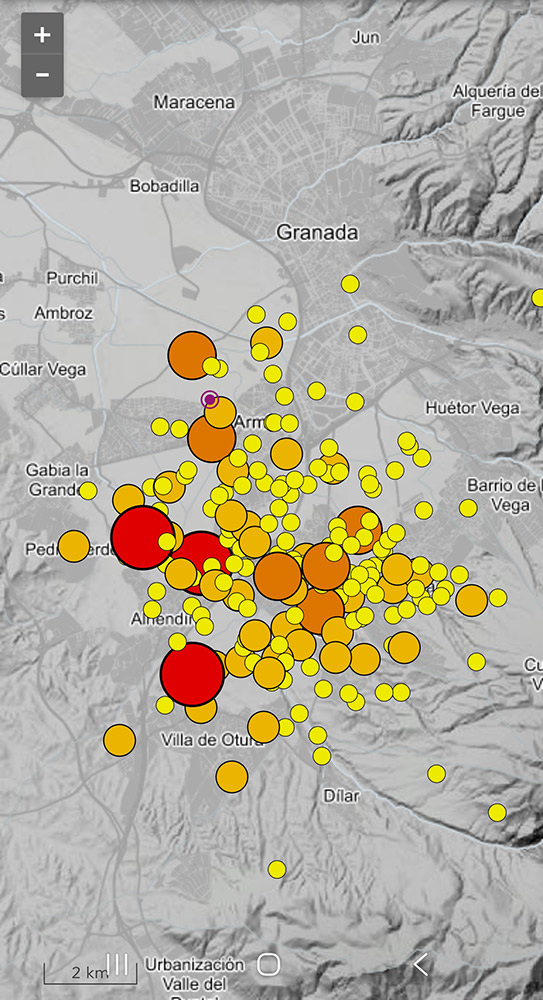
Where is the situation heading? A quick return to normality or more damage? Who knows. At 7.14pm today (Wednesday 19 August), IGN recorded another magnitude 3.1 earthquake northeast of Las Gabias, following a succession of smaller tremors during the afternoon.
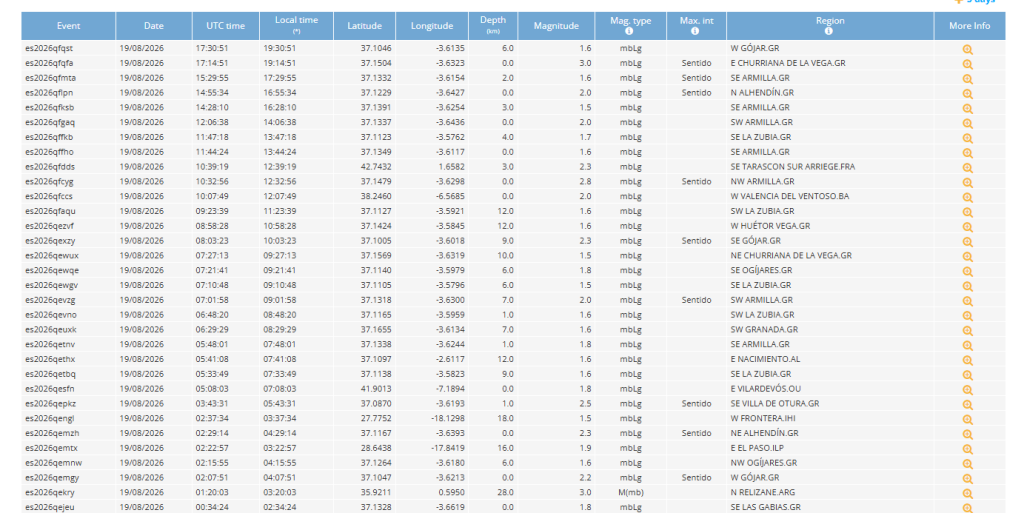
Regardless of whatever PR effort (for want of a better term) is being implemented by official sources, it is premature to declare that the sequence is winding down. Nobody knows what will happen next. That feeling of uncertainty is precisely the problem.
How long can you sleep outside?
Around 600 people were evacuated from 371 homes in Las Gabias after damage was discovered on Tuesday 18th August. Most found alternative accommodation with family or friends, while emergency accommodation was offered to those who were stuck.
Many other residents have remained outside because they are frightened.
Plastic chairs, benches, tents, mattresses, and blankets appeared in parks, plazas, and other open spaces, creating strange makeshift sleeping areas that do not – quite frankly – look very comfortable. Some residents mounted their own gazebos and cooking equipment, while others simply clustered on the ground.
There is little publicised information about toilets, washing facilities, phone charging, or other basic provisions for people staying outside.
One night is understandable. If this sequence continues for weeks or months, sleeping out is unsustainable. And wandering into your apartment to collect a change of clothes could be the exact moment a tremor hits. According to our eyewitness, people are gradually starting to return home in the affected zone of Zaidín.
Is the danger being played down?
Official sources, understandably, want to prevent public panic. There is an obvious contradiction. Unless a building has been declared unsafe, people eventually need to go home to shower, change clothes, collect belongings, or charge their phone. For somebody frightened enough to sleep outdoors, every trip home involves making the same risk assessment.
Granada mayor, Marifrán Carazo, has repeatedly called for calm and urged residents to rely on official sources. She has acknowledged, however, that the uncertainty remains because earthquakes cannot be predicted.
Jesús Galindo, director of the Andalusian Institute of Earth Sciences, claims that the fault lines currently activated are small and cannot produce earthquakes larger than those already experienced.
That comment needs some context. Magnitude alone does not determine the impact of an earthquake. The 1956 Albolote earthquake was around magnitude 5.0 but reached intensity VII–VIII and caused serious damage. A shallow earthquake close to a densely populated area can be destructive without having a huge magnitude.
Scientists are still trying to establish exactly what is happening beneath the Granada basin, and are discussing a seismic swarm. Researchers are considering whether a new fault line has become active.
That does not mean that a larger earthquake is coming. It means that nobody knows what happens next.
Even the numbers can confuse people
Different seismic organisations give slightly different representations of the same event. Magnitudes can vary according to the methodology and data used, while the total number of earthquakes reported in a specific area (such as Granada basin) depends on the cut-off point for the minimum magnitude recorded.
There are perfectly legitimate scientific explanations in play. However, how many residents are experts in seismology? Or understand all these numbers? When official figures vary, and there is a “nothing to see here” vibe, suspicion easily follow. This, in turn, can lead to a strong urge to leave the city, or sleep in a park.
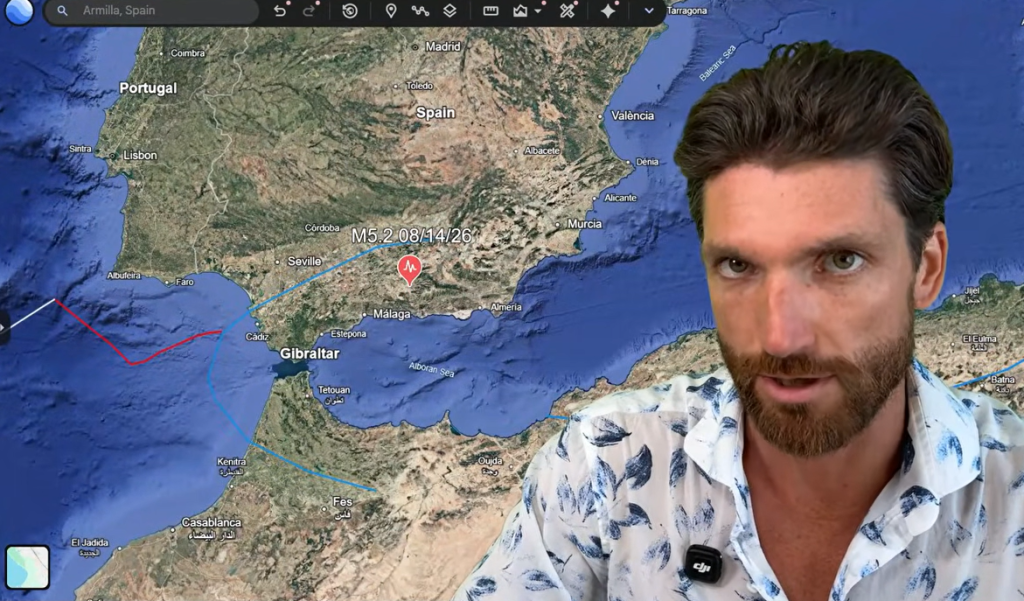
American geophysicist and YouTuber, Stefan Burns, has uploaded his research on the Granada Basin. In a recent podcast, he compares the current Granada earthquakes to previous seismic sequences. He believes that a larger event could occur later.
Some of his material draws on legitimate geophysics. Granada’s fault system is complicated, and local ground conditions influence how strongly an earthquake is experienced. However, he also ventures into more speculative territory, including those involving eclipses and solar and lunar cycles.
Although this concept might have some credence, there is no accepted scientific method for predicting Granada earthquakes from an eclipse. The sharing of Burns’ theory illustrates another problem: when official information doesn’t suffice, people tend to look elsewhere.
Disaster zone or nothing to see here?
Public reaction increasingly seems polarised: spectacularising the Granada earthquakes or playing them down. One version presents Granada as a city in chaos. The other suggests that almost nothing has happened.
Neither position is accurate. Most of Granada is functioning normally. Shops and businesses are open and the overwhelming majority of buildings are unaffected.
However, three people suffered minor injuries on Tuesday 18 August, 14 people required medical attention, hundreds were evacuated, and buildings have required inspection. The Alhambra reopened after building inspections, although the Alcazaba remains closed. The Cathedral has remained closed for inspections.
And earthquakes are still being recorded in the Granada basin. This is the middle ground to take: for now: that the Granada earthquakes are an ongoing event.
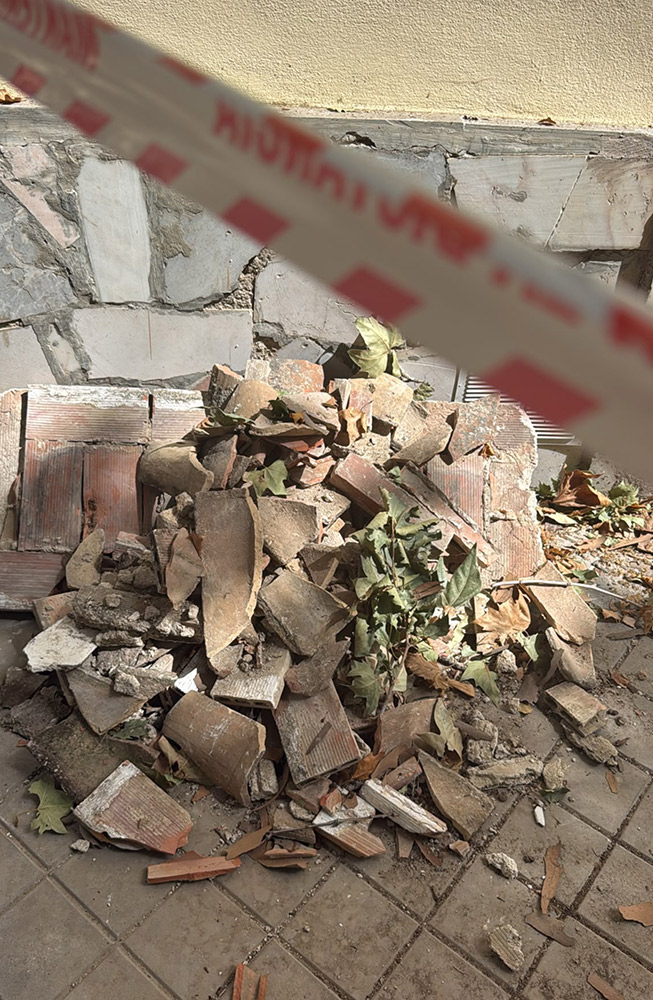
Photo: Staff Reporter
Should everyone flee to the coast?
Leaving Granada for a night because you are frightened of tremors is understandable. However, distancing yourself from Granada city is not automatically a valid safety strategy. Local geology matters enormously, as does the building you inhabit. And…. if this situation occurs for weeks or months, you will have to return eventually.
The key question isn’t necessarily: “How far can I run?” It is: “Am I safe where I am?” As well as: “What can I do to minimise risk in my home?
For tourists, there’s currently no general official advice to avoid Granada. Normal life continues across most of the capital.
On the flipside, nobody can guarantee that visitors won’t feel another earthquake or that the sequence has finished.
Fear of the unknown
There’s something faintly reminiscent of the early days of Covid. Not the threat itself, but the fear generated by something unfamiliar: rapidly changing information, misinformation, doom merchants, deniers…
Technical explanations compete with dramatic headlines, social media chats, and AI-generated earthquake infographics whose origins are not transparent.
Meanwhile, an elderly person living alone, a single parent deciding whether to take the kids outside, or somebody staring at a new crack in the wall doesn’t need a lesson in plate tectonics!
They need straightforward answers. Is my home safe? Which cracks are not superficial? Where do I go if there is another quake?
An easy-to-digest public information campaign would not go amiss if the sequence continues. Meanwhile, people are surely weighing the risk of further tremors against factors such as personal comfort, fatigue, or access to toilets!