With Christmas coming, Jo Chipchase compares the culture of drinking in Spain and Britain. Special attention is paid to rural Andalucía, where ordering a third vino at 1pm with tapas can easily pass as “just having lunch”…
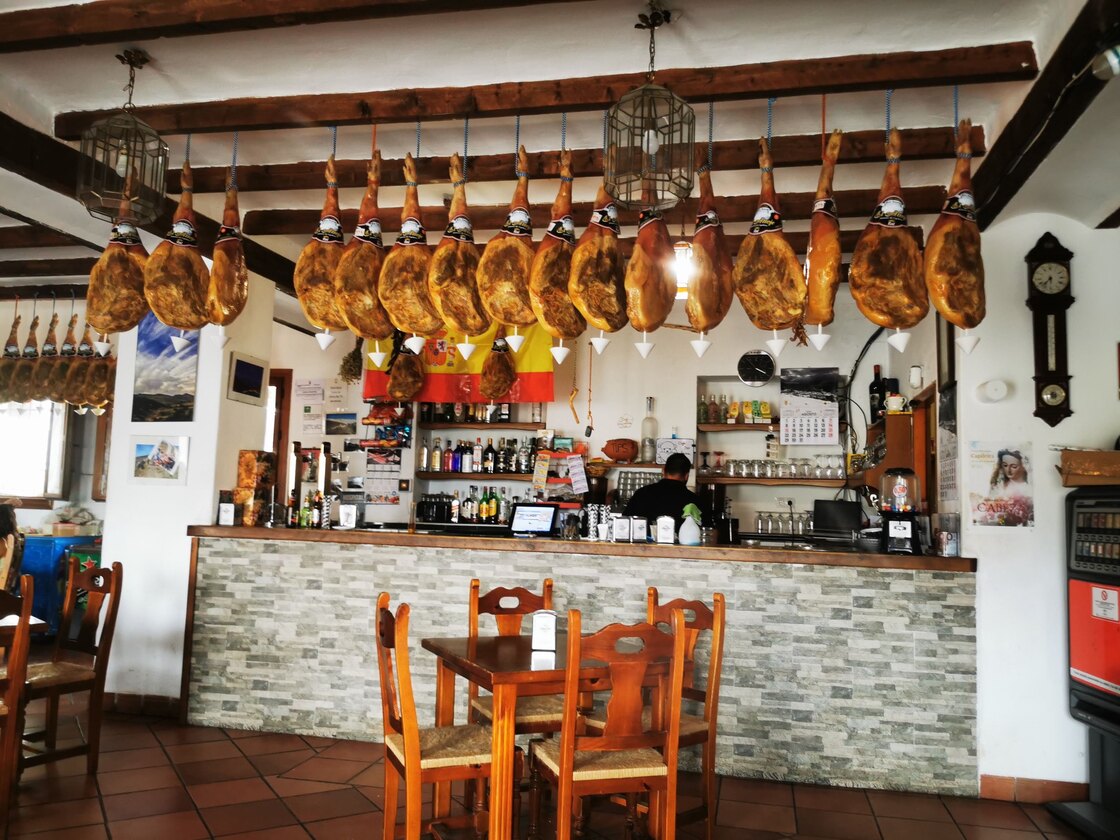
FOR THOSE living in Granada province, the advantage of bars serving free tapas (small, free accompaniments to qualifying drinks) makes it easy to order a third cerveza and claim that you’re just having lunch or “a snack”. The first drink comes with an enticing tapa; the next drink will normally bring a different platter. You may wonder: what will emerge as tapa number three if you order “just one more drink”?
In rural Andalucía, the old adage claims it’s always the “penultimate” drink. This can prove dangerous, re hitting the brakes before you’re tipsy. The tendency to over-imbibe is important in the run-up to Christmas. With “festive magic” in the air, drinking in Spain – perhaps near the cosy wood-burning stove in your local bar, where they burn their wood – can seem ubiquitous.
Granada’s ayuntamiento (city council) explains how regional bars serve free tapas – generally bringing a different platter with each round of drinks. Some people (the author included) invent their own Tapas Trail, identifying the best tapas in town, and rating bars accordingly. Granada’s provincial tourism authority describes tapas as accompanying beer and local wine. Tapas also tend to arrive with mosto (non-alcoholic grape juice), soft drinks and, sometimes, with bottled water. Remember that drinking in Spain – especially rural Andalucia – is much cheaper than drinking in Britain. With free food!
Using “lunch” as an excuse to imbibe
Throughout the year, and especially in the festive season, a caña (small beer), or a diminutive vino, may seem less questionable than an unfortunate session hoofing down cubatas (spirits with mixers). However, even if you’re drinking tiny beers, how many units of alcohol are you really consuming over the entire week? Also, what about the people who don’t drink daily, but then consume 10 vinos on Saturday and Sunday when the village is at its liveliest?
In Spain’s EDADES 2024 survey, 16% of respondents aged 15 to 64 admitted to binge drinking at least once during the previous month. The survey counted 5+ drinks as binge drinking for men and 4+ for women (taken on one occasion, within about two hours). Binge drinking was most frequent in the 20 to 29 age group. Demonstrably, this is also some people’s normal lunchtime consumption!
How common is daily drinking in Spain?
In Spain’s 2024 EDADES survey, 10.5% of people aged 15 to 64 claimed to have drunk alcohol every day in the previous month. Daily drinking was more common amongst older respondents. In the 2024 Health Survey for England, 6% of people aged 16 and over said they drank “almost every day”. The English survey included over-64s and asked how often people usually drank over the previous year.
In an older study – Eurostat’s 2019 survey – 13% of people aged 15 and over in Spain claimed to drink alcohol every day. In Portugal it was 20.7% – the highest figure in the EU. In Spain, 20.2% of men and 6.1% of women said they drank daily. This is no big surprise, bearing in mind the clear popularity of the village bars, and the people drinking beer and sol y sombras (brandy with anís) at 10am.
Does Spain consume more alcohol than the UK?
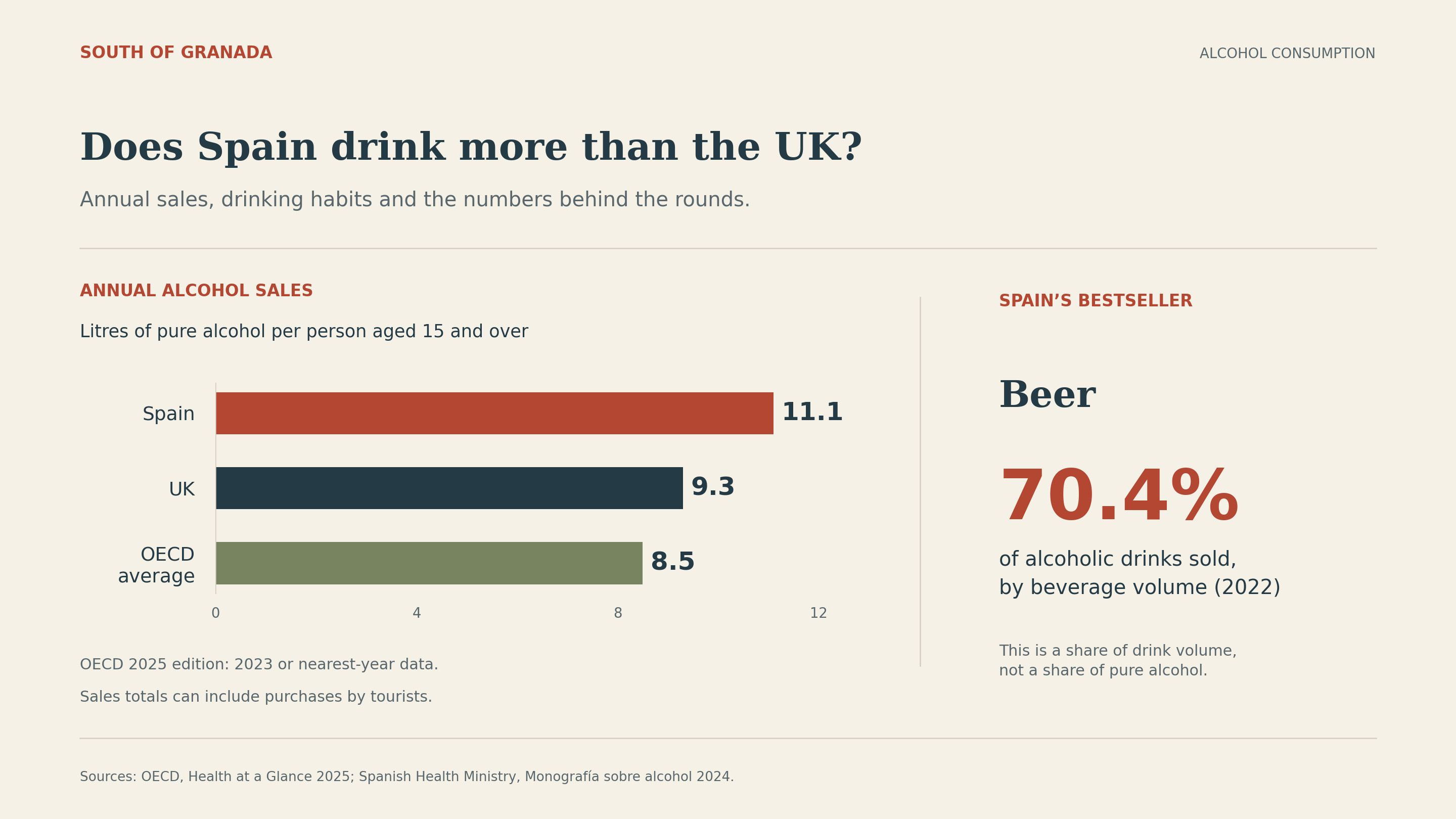
The OECD’s Health at a Glance 2025 country notes put Spain’s annual alcohol consumption at 11.1 litres of pure alcohol per person, compared with 9.3 litres in the UK. Both, unsurprisingly, exceed the OECD average of 8.5 litres. The OECD takes the alcohol sold, works out how much pure alcohol it contains, and divides that by everyone aged 15 and over in the population, including those who don’t drink.
The OECD figures generally include alcohol bought by tourists (presumably including all those Happy Hour Brits in Benidorm), while some unrecorded sales are excluded. Measurement methods also differ between countries.
Spain’s guzzling figure is higher – although it doesn’t establish exactly how drinking is spread across the population (for example, is grandma drinking?). The OECD also changed the source it uses for Spain’s wine sales.
| Country | Litres of pure alcohol per person per year |
|---|---|
| Spain | 11.1 |
| United Kingdom | 9.3 |
| OECD average | 8.5 |
Cerveza leads the sales figures in Spain
Spain’s reputation for vino can obscure the amount of cerveza consumed. The Health Ministry’s 2024 alcohol report, using tax agency data for 2022, says that beer accounted for 70.4% of the total volume of alcoholic beverages sold. Wine came next, with spirits (those deadly cubatas) lagging behind.
Beer was the most commonly consumed alcoholic drink among the men and women surveyed. This would arguably be borne out by people-watching in your village bar, from 10am onwards!
Christmas parties and the botellón culture
The Christmas season in Spain – extending until 8 January – brings village gatherings, work parties, and family lunches. Frequently, these occur in the same week, and cluster around the puente (bank holiday) weekend around 5 December, as well as Christmas itself. There’s a difference between a drink with lunch and a whole night spent drinking in the village plaza.
The Christmas party season can bring another dubious cultural “highlight”: the botellón. This is the name for unlicensed drinking parties held in public spaces. These events are usually attended by adolescents – sometimes with sound systems blaring from their car boots.
In the full survey report, 30.8% of those aged 15–24 reported participating in a botellón during the previous year. The “excitement” doesn’t all happen over the family dinner for Nochebuena or Nochevieja (Christmas Eve and New Year’s Eve). Sometimes the venue is the local car park.
The result can be an endless hangover – as well as noise disturbance for those who are not participating.
Getting home after drinking in Spain
In rural Andalucía, finding a bus or taxi home after a night out can be an achievement in itself. South of Granada’s examination of Spain’s drink-driving rules and the proposed near-zero limit covers the rules and the proposal. The reporter’s Halloween account of becoming a zombie offers a case in point.
On 29 September 2026, Spain’s Congress voted to consider lowering the drink-driving limit to 0.2 g/L in blood or 0.10 mg/L in breath. The proposal lapsed in October, so the vote did not change the legal limits.
The main takeaway is that it’s wise to find a sober, designated driver – or just stay in your own village/town/house.
The health risks extend beyond your night out
The bad news is that alcohol is associated with liver disease, cardiovascular disease, dependence, injuries, and mental health problems, according to the World Health Organization. Total alcoholic units consumed and the drinking pattern affect the risk. Meanwhile, those heavy Christmas sessions bring more immediate risks, including falling over and hurting yourself, or insulting the locals. The resulting hangover might be the least of your worries.
Heavy drinking also carries a well-established cancer link. WHO identifies at least seven cancer types caused by alcohol, including breast, bowel, liver, and oesophageal cancers. For cancer risk, no safe threshold has been established. Unsurprisingly, risk generally rises with consumption. The fourth vino of the night might not be as attractive as it seems.
Wine and beer contain the same alcohol as spirits. Carcinogenic substances include ethanol and acetaldehyde, produced as the body metabolises alcohol. The type of drink, and whether it is consumed with food (such as your favourite tapas), do not eliminate the alcohol-related cancer risk.
How much alcohol is in your glass?
The UK’s NHS guidance advises no more than 14 units a week for men and women, spread over at least three days, with several alcohol-free days in between. Note that it says “weekly”, not what you managed to consume at that village fiesta on sábado alone. Spain’s low-risk guidance specifies average limits of 20 grams a day for men, and 10 for women.
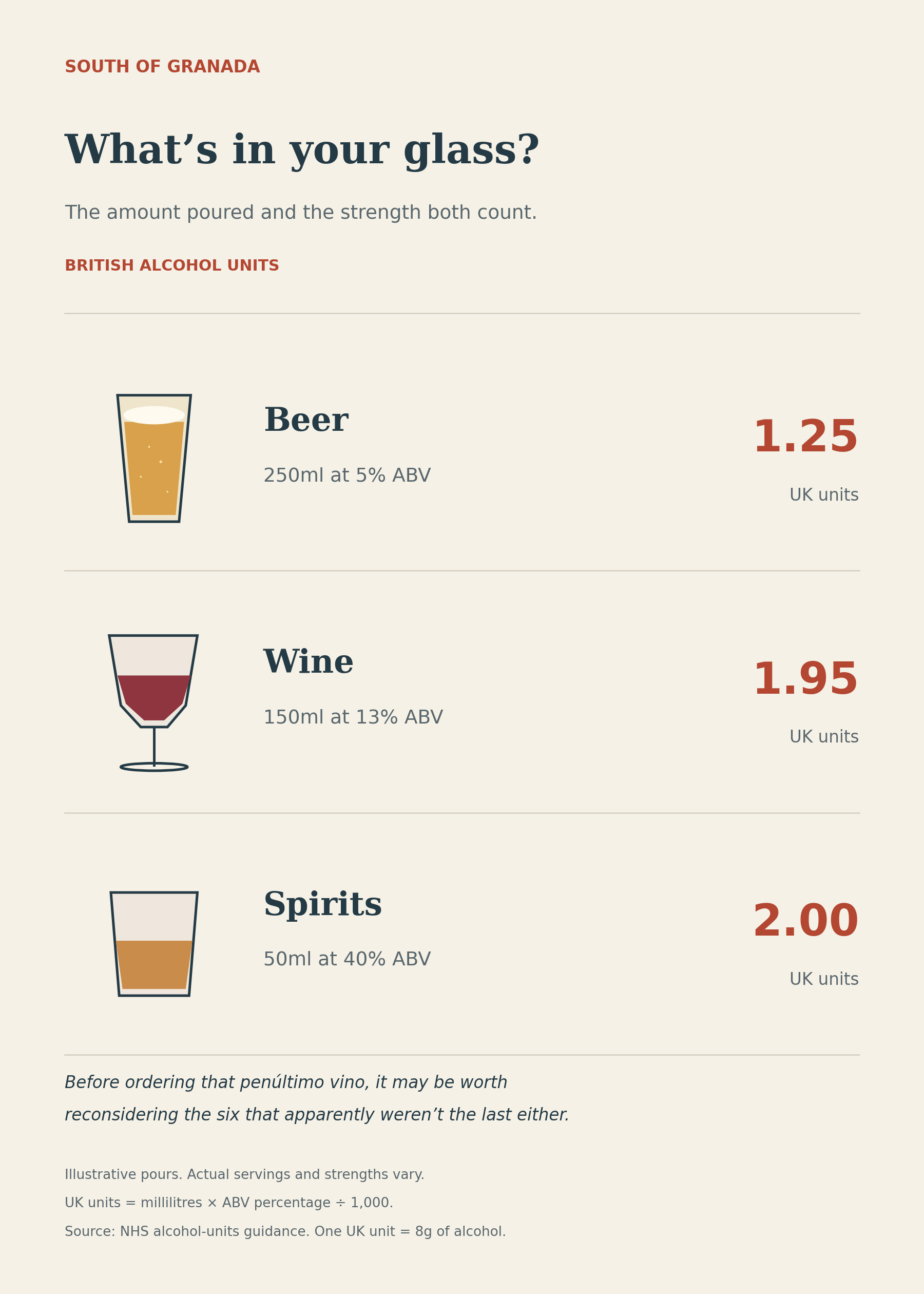
As anyone can see from visiting different bars, measurements of alcohol vary widely. A British unit contains eight grams of alcohol, while a Spanish standard drinking unit contains 10. Glass sizes and strengths also vary, depending on who pours them (for example, the reporter encountered huge glasses of vino in the Eastern Alpujarra!). Using the NHS formula, a 250 ml beer at 5% contains 1.25 British units; two downed every day come to 17.5 units a week. A 150 ml glass of wine at 13% contains 1.95 units, or 13.65 over seven days. Scary…?
| Serving | UK units | If consumed daily |
|---|---|---|
| 250ml beer, 5% ABV | 1.25 | 8.75 units a week |
| Two 250ml beers, 5% ABV | 2.50 | 17.50 units a week |
| 150ml wine, 13% ABV | 1.95 | 13.65 units a week |
Forewarned is forearmed…
If you’re assessing the situation, here is the NHS alcohol-unit formula: volume (ml) × ABV (%) ÷ 1,000. Or try Drinkaware’s unit and calorie calculator.
Before attending the fifth Christmas party of the week, maybe we should stop and think: should we order a nice agua con gas (fizzy water) or make our way to the municipal fuente (fountain)? A selection of alcohol-free drinks can also be found in larger supermarkets, providing an alternative to water and fizzy refreshments that are commonly associated with children and old ladies.
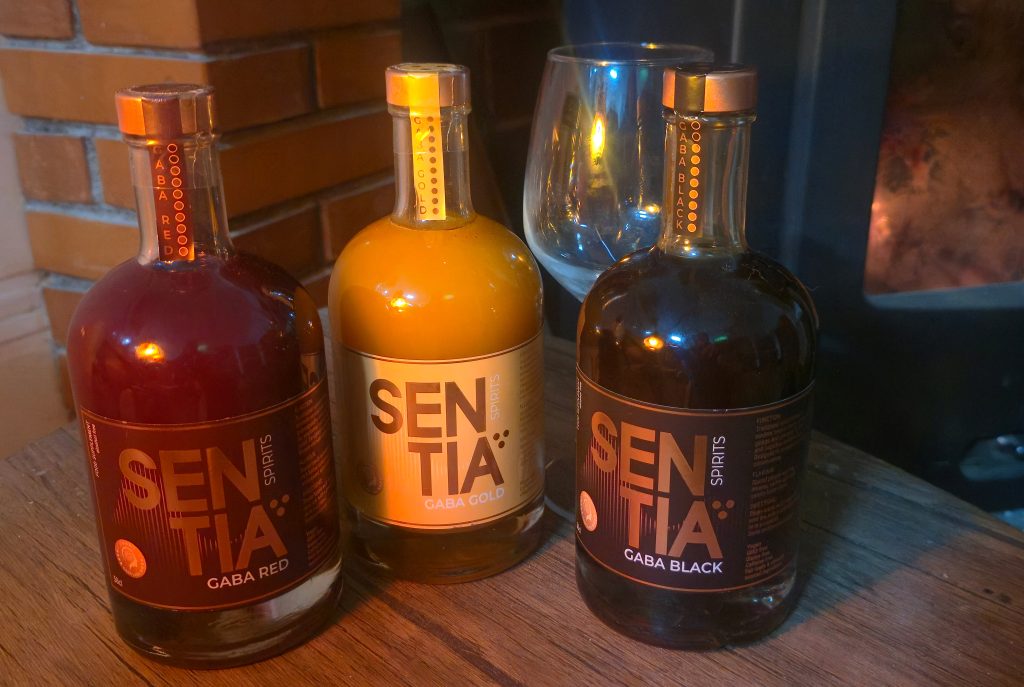
You could also invest in sophisticated, adult, non-alcoholic beverages. Sentia’s European shop sells botanical drinks, Granada producer Espadafor has whisky-style alternatives, and The Blue Dolphin Store stocks alcohol-free spirits, including ISH London Botanical.
Bottoms up – and don’t fall over! Drinking in Spain doesn’t need to be a big disaster.