
Jo Chipchase explores whether a panting dog that is “off his food” needs a cool space, or the vet… and how the heatwave can mask serious canine illness, including parvovirus or gastroenteritis…
EVERY SUMMER, pet owners across Andalucía in the “dog days” of late summer re faced with the question: “Is my pet just hot, or is something genuinely wrong with him? Why is he not eating?”
During a heatwave, humans suffer from lethargy and appetite loss during the warmest hours. Our canine companions are the same. Your dog will slow down, sleep more, and search for cool tiles – perhaps under your desk or in a corner. However, some heat-related behaviours – such as lethargy and refusing food – can mask the onset of serious illnesses. These include parvovirus, poisoning, pancreatitis, and severe gastroenteritis
Spotting the difference, in time, could save your dog’s life.
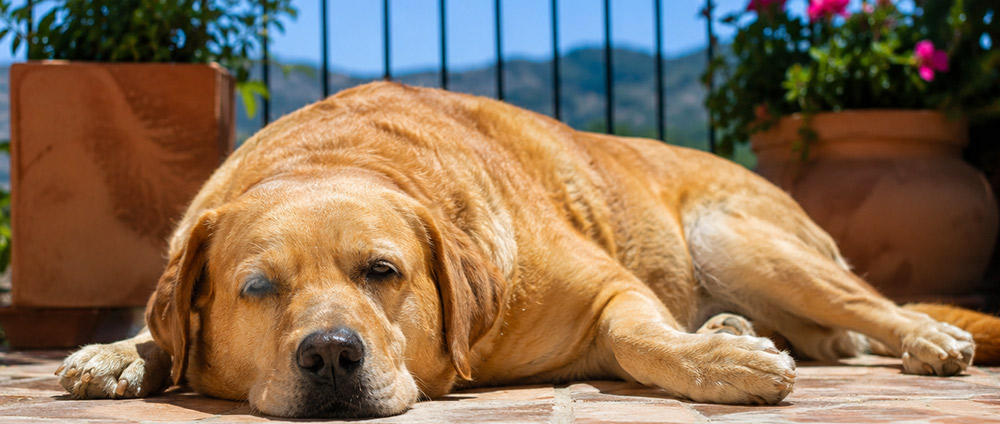
What is “normal” in hot weather?
A healthy dog, in extreme heat, may pant more than usual, drink more water (possibly needing more pee breaks), spend time lying on cool tiles, sleep through the hottest part of the day, eat less than normal, be unenthusiastic about exercise (hot surfaces hurt paws), and resist jumping in your car. Beware of hot surfaces, such as car seats exposed to overhead sun.
These behaviours should normalise once the dog has been moved somewhere cool, offered fresh water, and allowed to rest.
However, refusal to eat – mistaken as “oh, he doesn’t like that brand of food” or “he’ll eat it later, when it cools down” – can signify something more sinister.
Remain vigilant.
Warning signs that you require the vet, today
Do not automatically assume that these potential symptoms are “just the heat”. Refusing food for more than 24 hours is a warning sign: refusing water is a huge red flag.
If symptoms start to escalate, it’s time for the vet. Don’t “wait and see overnight”, especially during a weekend or public holiday, when local vet services may become difficult to access quickly.
A canine temperature of above 39.5°C (the normal range is around 38.0–39.2°C) is a danger sign. The author’s dog presented, during the San Juan fiesta, with a 40°C temperature and evident malaise. He was taken straight to a vet. Prolonged high fever and severe dehydration can contribute to damage to organs such as the kidneys and liver if not treated promptly.
Other signs of an urgent problem include: repeated vomiting or regurgitation, bloody diarrhoea, extreme lethargy, loss of interest in surroundings, excessive drooling, pale grey or blue gums, a hunched or painful posture (the dog may stand, static, in this position for some time), weakness, or collapse.
If the dog becomes unresponsive, head straight to the 24-hour animal hospital. If cost is a concern, tell the practice immediately. Many vets will discuss emergency stabilisation and payment options.
How quickly you act can make all the difference.
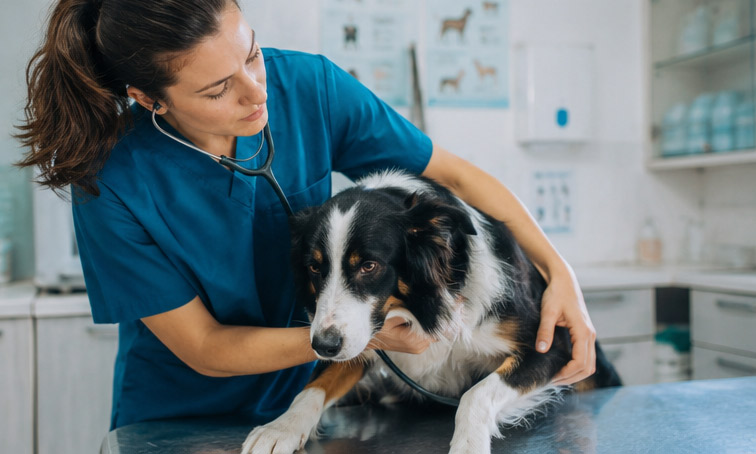
Heatstroke is a veterinary emergency
Heatstroke in dogs is different to simply feeling hot.
Emergency signs include: heavy panting that doesn’t settle, bright red or pale gums. collapse, confusion or disorientation, vomiting or diarrhoea, seizures, body temperature above 40.5°C.
Seek veterinary treatment immediately. Heatstroke is an emergency, even if your dog appears to recover after cooling.
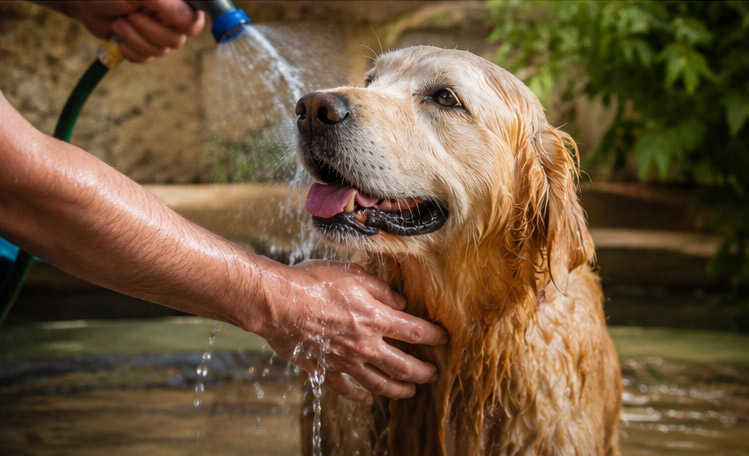
If you can’t get straight to a vet (for example, because you live in a remote area), move your dog into the shade or an air-conditioned room immediately. Pour cool or cold tap water over the body, concentrating on the belly, groin, paws and legs, and use a fan if available to increase cooling through evaporation. Offer small amounts of fresh drinking water if the dog is conscious and able to drink, but never force water into its mouth. Head to the nearest veterinary practice immediately, continuing the cooling process during the journey if possible. Even if your dog appears “normal” after a while, heatstroke can cause delayed damage to organs such as the kidneys, liver and brain, as well as affecting blood clotting. Every dog with suspected heatstroke should be examined by a vet.
Be careful of dogs climbing into your car – or not climbing out when you arrive home at night, in the pitch darkness on your ‘campo’ . The author recollects a distressing incident on the mountain, when a beloved family pet had somehow remained in the pickup truck. Despite people walking past repeatedly, he had gone to sleep in a footwell. The dog was found with the early stages of heatstroke, when the family decided to drive to town. Fortunately, cold water was applied, and the dog was OK.
Just because your dog is walking doesn’t mean he’s fine
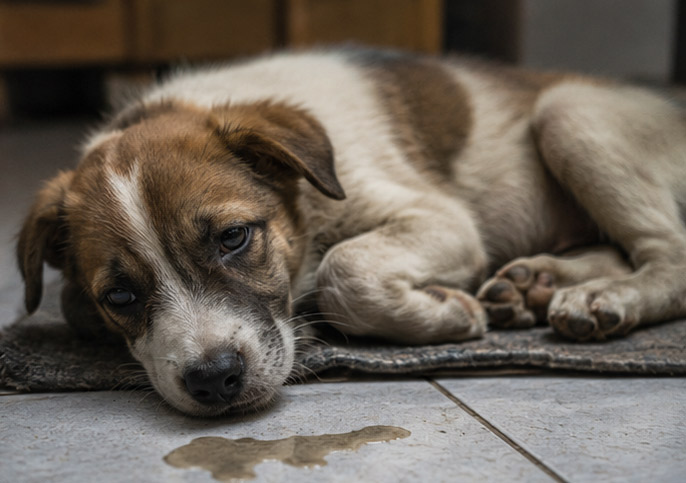
One common mistake is assuming: “He’s still upright/walking, so he can’t be that ill.” Unfortunately, this is not always the case. Dogs with parvovirus, pancreatitis, or severe gastroenteritis, may still walk, drink, respond to their owner, and show some interest in their surroundings.
The author’s dog, who was hospitalised with parvovirus, was trying to escape the front door the previous evening. He probably preferred the cool air outside, but was definitely not “recovering” or “turning the corner”, as everyone initially thought.
He still showed interest in his owner: it is natural to seek out your human for help.
Yes: they can be seriously ill, and still be upright.
A real-life lesson re parvovirus
The author’s experience was horrendous for the dog and traumatic to his humans. Early signs were overlooked. It seemed that the young dog (a large cross breed) was struggling with the heatwave inside an uninsulated Spanish townhouse. Looking back at Google Photos, there was some weight loss before the obvious and severe symptoms manifested.
With everyone sweltering and having ‘siestas’, it was difficult to see that the dog was “coming down with something” – rather than hiding from the heat.
The dog was then taken to 1,800m, where it is cooler, to make him more comfortable…. and hungrier. However, two days later, he suddenly deteriorated, resulting in a panic-laden saga that every owner would want to avoid.
The dog developed a 40°C fever, regurgitating vast quantities of water, vomiting, excessive drooling, standing in a hunch-backed position, refusing to eat, and bloody diarrhoea (the latter is terrifying). At some points, he was reluctant to drink water, but was encouraged to do so from the start.
Initially, parvovirus was not suspected, as the dog was vaccinated. However, despite early treatment with injections and IV drips, the dog was not improving, and was admitted to animal hospital in nearby Granada, where parvovirus was confirmed.
The experience highlights an important lesson: prompt veterinary reassessment, hospitalisation, IV fluids and supportive treatment gave this dog the best possible chance of survival.
If you think that something isn’t right, act on that thought!
Vaccination helps – but isn’t perfect
Parvovirus vaccination dramatically reduces the risk of severe disease, but no vaccine offers complete protection.
Dogs that have missed part of their primary vaccination course, or booster schedule, are more vulnerable. Puppies are more vulnerable. Some breeds are more vulnerable. However, even fully vaccinated dogs can occasionally become infected.
The important point is that vaccinated dogs who develop parvovirus may have a better chance of surviving than completely unvaccinated animals. Also, remember that the cost of parvo shots from your local vet is a drop in the ocean compared to animal hospital.
If you’re unsure whether your dog’s vaccination schedule is correct, check with your vet – rather than relying on memory. If you have an unvaccinated puppy, don’t allow it on the ground in busy areas, such as dog parks, communal dog-toileting areas, kennels, and places heavily used by dogs of unknown vaccination status. Parvo remains in the soil for several years, and is transmitted by faeces. Don’t allow your dog to eat the excrement of another, whether it is vaccinated or not.
Caring for a recovering dog
Recovering from parvovirus, or severe gastroenteritis, doesn’t end when the dog leaves hospital.
When you get home, you have a sick animal that needs nursing. Follow your vet’s feeding advice. Many recovering dogs begin with small, frequent meals of a highly digestible diet. Some will initially accept plain cooked chicken or another bland food, and you need to rebuild his appetite and bodyweight while his damaged intestinal lining heals. This may require hand-feeding and encouragement. The author was actually playing “look at the aeroplane coming towards your mouth” with pieces of chicken breast, like you would with a toddler. Your dog may require medication, such as anti-sickness medication, antibiotics or pain relief, depending on your vet’s treatment plan.
Don’t over-exert your dog and avoid contact with other dogs – especially unvaccinated ones – for at least the period advised by your vet (frequently around two weeks after recovery). Recovering dogs may continue shedding the virus in their faeces. Remove all faeces first, then disinfect suitable hard surfaces using a disinfectant known to kill canine parvovirus, following the manufacturer’s instructions.
If you have commitments you can’t possibly escape (children, the elderly, work, etc.), you need a dogsitting setting where your dog can be isolated for two weeks – or, at very least, not mingling with unvaccinated dogs or puppies. Clean up faeces.
Be careful of your choice of dog sitter – as you might regret a bad selection later! They need to keep up with the medicine and ensure he is eating and hydrated. Also, have a plan in place for deterioration and the emergency vet.
Keeping dogs safe during a heatwave
We humans don’t like running a marathon at midday in 37°C temperatures, and Fido doesn’t either! Try to walk early in the morning or after sunset. In this season of fiestas and football matches in the bar, try not to flop with a hangover and forget walkies. Avoid taking a long, hot route with no water sources.
Always provide fresh drinking water. Don’t trust random family members (or kids!) to keep refilling the drinking bowl – so deploy a bucket or two around the house if you’re going out. Make sure he can reach them.
Give dogs access to cool, tiled floors or shaded areas.
Never leave a dog in a parked vehicle in summer. Even with the windows open, they can overheat quickly.
Don’t tether your dog in town centres, where he might be stolen. It is best to leave him at home, with a fan and his water, and do your shopping solo.
Trust your instincts – and note any symptoms
If your dog wants to spend a hot afternoon snoozing on cool tiles, and objects to walkies on a hot pavement, that’s probably normal.
If he’s repeatedly vomiting, has a fever, stops eating, starts drooling, develops bloody diarrhoea, or seems “not right”, don’t blame the weather.
A serious illness can easily be mistaken for simple heat exhaustion during a heatwave. Heat can also make a genuinely sick dog appear even more lethargic than normal. Also, the humans might be less vigilant, because they are also “queasy and lethargic” with the heat and humidity.
When in doubt, let your vet decide.
Early treatment can make all the difference. Not every dog will reach the vet in time. We know of cases where intervention arrived too late, or not at all.
You might think this will never happen to you. It can.