
Jo Chipchase, who lives in rural Granada, explores how and why we should be prepared for wildfires…
THE devastating wildfire around Los Gallardos and Bédar – in the Levante Almeriense, close to Mojácar and around 40–50 km north-east of Cabo de Gata – has claimed at least 12 lives. Today, 23 people remain missing, as emergency services continue their search and identification work.
More than 7,000 hectares (70 square kilometres) of woodland, scrub and agricultural land have burned in the wildfire, around 1,400 residents were evacuated, and hundreds of firefighters, Military Emergency Unit (UME) personnel, Guardia Civil officers, and other emergency responders were involved. Prime Minister Pedro Sánchez is expected to visit the affected area soon.
Today, the wildfire is said to be stabilised, has de-escalated from Level 2 to 1, and the evacuated residents have returned to their properties. UME is now withdrawing from the wildfire, which is considered one of the worst wildfires Spain has seen in recent years.
Engineers are investigating whether the wildfire was caused by an overhead electrical cable falling into roadside vegetation. Although this is the leading line of investigation, the exact cause remains unconfirmed. Whatever the ignition source, experts say that a combination of prolonged drought, dry vegetation, strong winds, and extreme temperatures allowed the wildfire to spread rapidly, leaving many residents with little time to react. Juan Moreno says it is one of the fastest wildfires seen in Andalucia, and possibly in Spain.
For readers in La Alpujarra, and across rural Granada, the tragedy in Los Gallardos is a tragic reminder that no rural dwellers are immune from the risk of wildfires.
Many residents will remember the Los Guájares wildfire of September 2022 – declared as Granada’s worst forest fire in decades. More than 5,000 hectares burned and thousands of residents were evacuated from villages including Los Guájares, Albuñuelas, El Pinar, El Valle and Vélez de Benaudalla. Thanks to the swift response of INFOCA, firefighters, the Guardia Civil, UME, and local authorities, there were no fatalities. At the time, the reporter covered the fire in a series of articles for ‘The Olive Press’.
One lesson learned from wildfires is oft-repeated: homes can be restored; lives cannot.
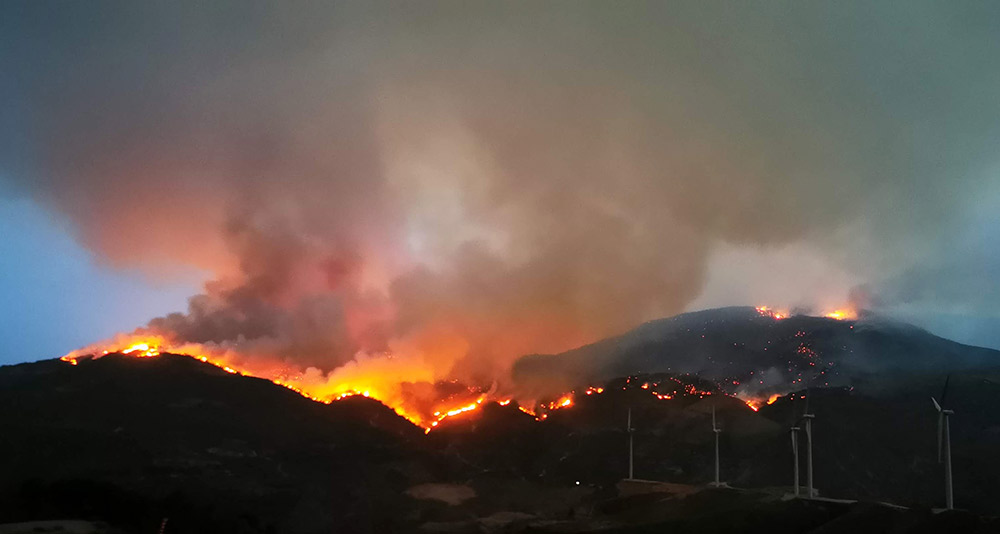
Leave early and follow official instructions
Spain’s Civil Protection authorities repeat the same message every wildfire season: if emergency services tell you to evacuate in the event of wildfires, leave immediately.
Do not wait until flames are visible from your property. By then, smoke, shifting winds, fallen trees, or damaged power lines may already be blocking escape routes.
During the Almería wildfire, the Junta de Andalucía repeatedly urged residents not to leave affected areas or use unauthorised, alternative routes without instruction, stating that people should follow directions from emergency services at all times.
Fire commanders are updated with real-tome information that residents may not know. (It’s like comparing the data on a GPS satellite information app to your restricted, ground view from within a traffic incident.) Even if an official diversion appears longer than your usual route, it may be the safest option.
Don’t assume that the “unmade” road / dirt track / cross country shortcut you normally use will remain passable during a wildfire. Even in a 4×4.
Rural properties may have just one escape route
A common theme voiced by residents of Los Gallardos, about the wildfire, was the vulnerability of rural properties on the mountain.
According to several eyewitness accounts, shared on community forums, some residents had a single, practical access road from their property, and – in some cases – only one safe direction of travel when the fire approached. Others described poor mobile phone reception, making it difficult to receive emergency alerts. Some said they had no information at all.
These personal accounts are not part of the official investigation but provide an insight into the challenges faced by residents of isolated areas during fast-moving wildfires.
Some wildfires start slowly, and are easier to control, while others increase in size and velocity quickly. Like Los Gallardos. One resident said they had minutes to evacuate before flames reached their olive trees, but that existing firebreaks (good to maintain around your property) appeared to stop flames reaching their home following evacuation. Several residents described how thick smoke made navigating mountain roads and ‘ramblas’ extremely difficult. Some escaped through the danger zone minutes before others lost their lives, as the route became impassable and cars burnt out.
For those living in rural Granada, these frightening experiences highlight the need to plan for wildfires in advance – rather than making life-saving decisions under pressure.
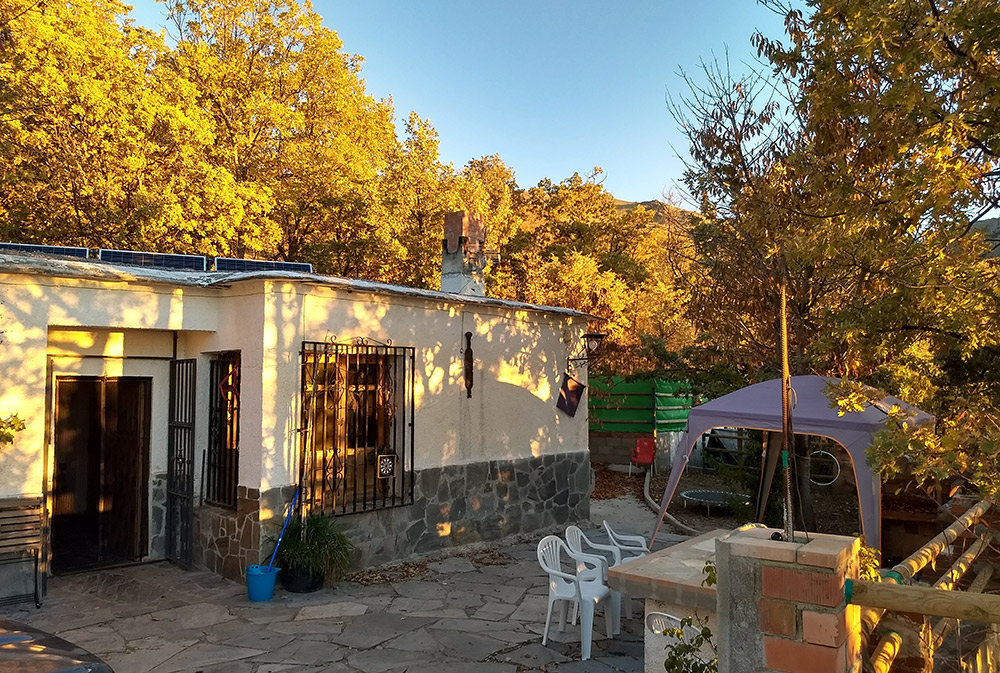
Don’t stay behind to protect your property
For many people, leaving home when told to do so is one of the hardest actions you have to do.
Many years of work (and love) may have gone into restoring a mountain ‘cortijo’, planting olive groves, or caring for livestock. The instinct to stay and defend your property, and its contents, is understandable.
However, wildfire professionals are unequivocal. Modern wildfires can change direction within minutes, as winds shift or become stronger. Smoke can reduce visibility to almost zero and escape routes can disappear with little warning.
Emergency services repeatedly emphasise that no building or possession is worth risking your life. If an evacuation order is given, leave immediately and allow trained firefighters to do their job.
Ironically, the reporter, last Monday, mistook a real hotel fire evacuation alarm for an advertised fire drill – and remained in place in a remote attic bedroom, until found by the fire steward. Fortunately, the electrical fire was extinguished after a large firefighting crew arrived. Viewing the situation from outside, it became clear that the fire source was fairly near the evacuated wing, and that no laptop (or even passports) would have been worth becoming trapped in a third floor attic with a steep, tiled roof and wooden floors! Save your work to the Cloud and keep ID documents and wallets within easy reach!
Prepare before wildfire season
Preparation begins long before the first ‘chispa‘ or plume of smoke appears.
Civil Protection and wildfire specialists recommend maintaining a defensible space around your rural home by removing dry grass, clearing pine needles and leaves, pruning lower tree branches, and keeping firewood, gas cylinders, and other combustibles well away from buildings. This firebreak zone is also not the place to store those old rattan chairs you need to take to the ‘punto limpio’, or the dirty foam mattress from that old bed.
Driveways and access tracks should be kept clear so that emergency vehicles can reach properties quickly.
Many of these jobs are best done during autumn and winter – before the arrival of late spring and summer heat.
While every wildfire behaves differently, maintaining cleared ground around buildings is a long-standing recommendation from wildfire specialists, as well as the “old boys” who have lived on the Spanish ‘campo’ for decades.
Have an evacuation plan
Every household should create an evacuation plan. The reporter recalls the words of an Australian national, who worked with horses. He said that, in his country, fire plans are ubiquitous and questioned why this wasn’t always done in La Alpujarra by the British ‘expats’. Really, he is correct.
Know at least two possible ways of leaving your property – if possible. Don’t lose the keys for any doors that are locked from the inside!
Keep passports, driving licences, TIEs, other residency cards, insurance policy dodcuments, your ‘Escritura‘, emergency contact numbers, essential medication, spectacles, car keys, phone chargers, power banks, and pet essentials together in an easily accessible waterproof pouch or grab bag. Having secure, digital copies of important documents stored on the Cloud is invaluable if originals are lost. You should definitely know your passport numbers!
During periods of extreme fire risk, try to keep your vehicle fuelled and ready to leave.
Discuss the plan with everyone in the household so that nobody is making important decisions under pressure.
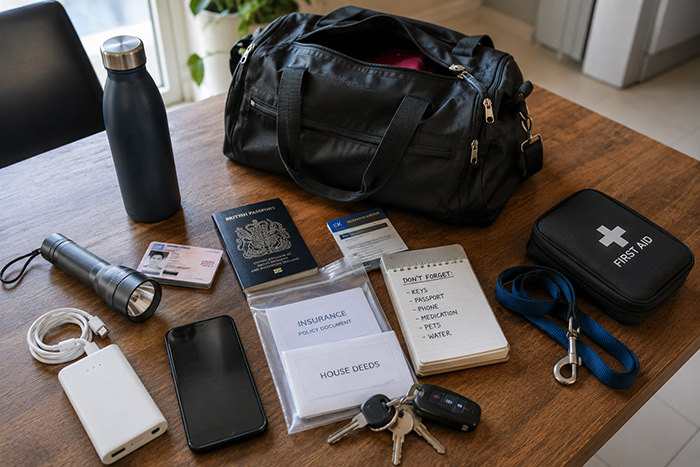
Don’t forget your animals
For many South of Granada readers, pets and livestock are members of the family. Emergency planning should include them, as well as the humans.
Keep dog leads, cat carriers – and any essential pet medication – within easy reach. Ensure that pets are microchipped and that your contact details remain up to date. Pets who have escaped wildfires on their own may run for kilometres before being found… and how can they be reunited if not chipped?
Horse owners should consider where animals could be moved safely in event of evacuation. What are the various escape routes, who has access to trailers, and who could help if the owner is away? Every stable or livery yard should have a written evacuation plan that everyone understands.
Trying to organise transport for horses when flames are approaching is unlikely to end well.
If your dog can’t be located when you are told to evacuate, despite a quick search, emergency services would generally advise against delaying your own departure. While some animals may detect danger and escape on their own, many domestic pets remain where they feel safest or continue waiting loyally for their owners. Returning to an active wildfire to search for a pet might put additional lives at risk. If a wildfire is approaching, never leave pets chained; call a loose dog repeatedly while preparing to leave; take a lead, treats or favourite toy to encourage it; if possible, confine it to one room near the exit while loading the car.
If you’re evacuating by vehicle
Leaving early in a vehicle is generally much safer than attempting to escape on foot. The car clearly gives you more speed to depart. Keep windows closed if driving through smoke, switch on your headlights, and follow directions from emergency services.
Avoid driving into thick smoke where visibility has disappeared.
Do not leave the road in search of what appears to be a shortcut through forestry tracks, ‘ramblas’, ‘secanos’, or mountain lanes – unless instructed by emergency services. The forestry track might not be safe!
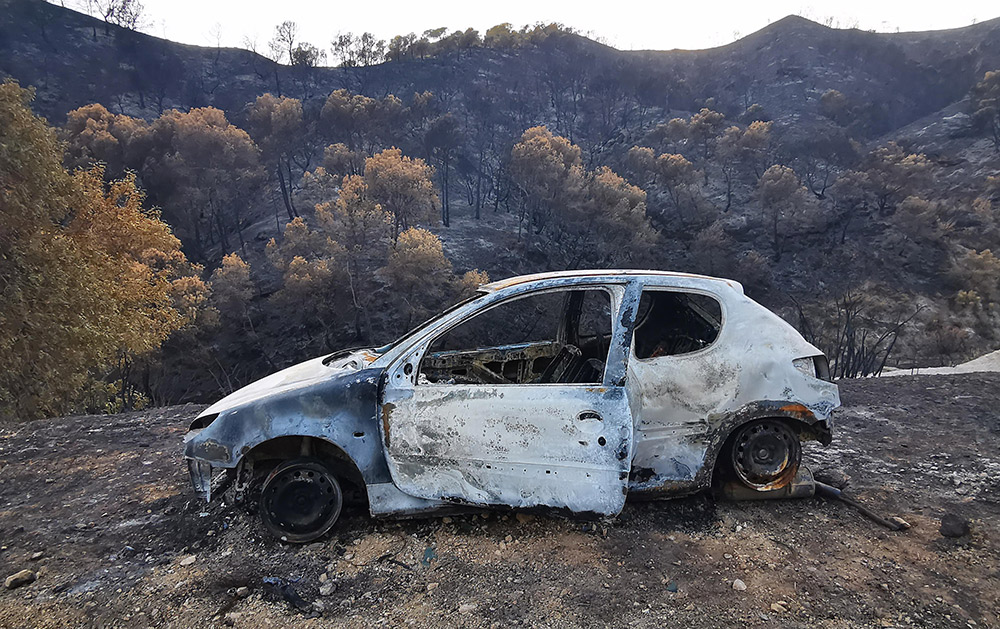
Protect yourself from smoke
In many wildfires, smoke is frequently as dangerous as the flames themselves.
If exposed, move away from smoke – wherever possible – and cover your nose and mouth with a damp cloth while escaping.
If escaping from a smoke-filled building, stay as low as possible, close doors behind you to slow the spread of smoke and fire, and leave immediately.
Do not delay your escape to collect possessions.
Don’t rely solely on your mobile phone
Mobile coverage in rural Andalucía can be unreliable, particularly in mountain areas where certain networks are downright patchy.
While official alerts are an important source of information, they may not reach every resident immediately.
Keep an eye on official sources – such as INFOCA and 112 Andalucía – pay attention to instructions from local authorities and emergency services, and don’t wait for multiple warnings if an evacuation order has already been issued.
Recovery starts with survival
Wildfires can destroy homes, crops and businesses in a matter of hours, but buildings can be rebuilt and insurance claims made, however stressful this is in the face of disaster.
The first priority is ensuring that everyone leaves safely – including pets and livestock, where possible. Firefighters repeatedly say that property can usually be replaced; lives cannot.
Make your wildfire plan
Ask yourself these questions now, rather than during an emergency:
- Does everyone know how to leave the property?
- Do we know where we’ll take our pets or horses?
- Are passports, residency documents, and medication easy to collect?
- Is the driveway accessible for emergency vehicles?
- Have we removed dry vegetation close to the house?
- Is the car fuelled during periods of high fire risk (having it on the reserve tank is never a good plan!).
- Does everyone know to call 112 in an emergency?
Emergency information
Emergency number
112 – Fire, ambulance and police throughout Spain.
Official information
- INFOCA – Wildfire incidents, prevention advice and operational updates.
- 112 Andalucía – Emergency alerts and official incident information.
- AEMET – Weather forecasts, heat alerts and wind warnings.
- Protección Civil – Official advice on preparing for and responding to emergencies.
Useful apps
- Local Fire & Weather Watch – Fire danger information, weather conditions and wildfire mapping.
- 112 Andalucía App – Emergency contact and alerts.
- AEMET App – Official weather forecasts and severe weather warnings.
The biggest lesson from Almería
Nobody expects a wildfire to reach their home. Many people believe they have “just a few more minutes” to make their escape.
The tragedy that unfolded in Almería demonstrates how quickly those minutes can disappear.
Whether you live in La Alpujarra, Lecrín Valley, Contraviesa – or anywhere surrounded by forest, scrubland or agricultural land – the safest decision is frequently the hardest one: leave early, follow official advice, and avoid unnecessary risks.
Don’t lose your life over your personal possessions, no matter how important they seem at the time.